Hera reaches the asteroid that DART crashed into
Hera launched on 7 October 2024 and reached the Didymos–Dimorphos binary asteroid in early November 2026. On 25 November ESA unveiled the first close-up views of Dimorphos.
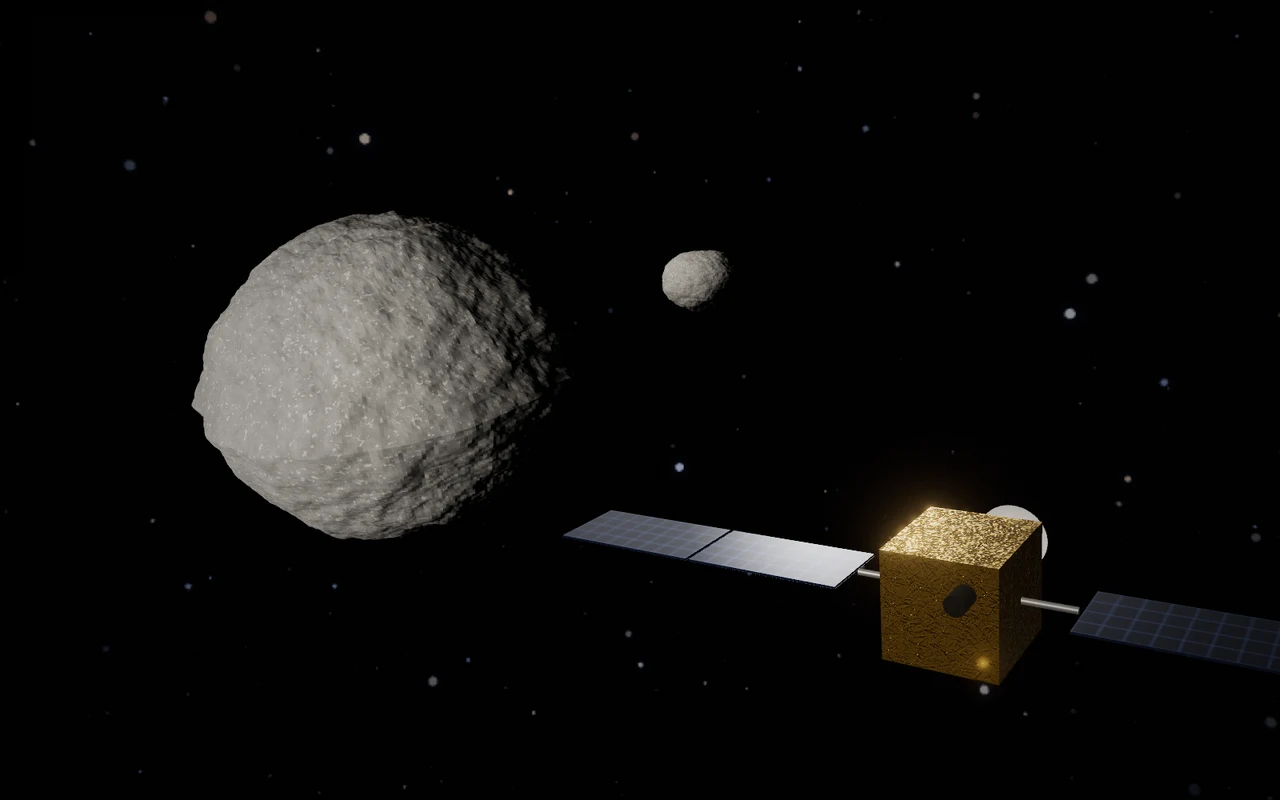
Image: Virtual Lab (3D illustration)
In September 2022 NASA's DART spacecraft deliberately slammed into the asteroid Dimorphos at about 6 kilometres per second. It was the first test of planetary defence: if an asteroid ever threatens Earth, could an impact nudge it off course? Afterwards Dimorphos's orbit around the larger asteroid Didymos became about 33 minutes shorter — far more than expected.
Now it is Hera's turn to inspect the 'crash site'. Didymos is about 780 metres across, Dimorphos 151 metres. Hera first imaged Didymos from a few tens of kilometres away; in those images Dimorphos was almost entirely in Didymos's shadow. On 25 November the European Space Agency unveiled detailed views of Dimorphos.
Hera will work at the asteroids for at least six months. It will measure Dimorphos's exact mass and internal structure, map the crater DART left behind and finally approach to within about a kilometre. It carries two small satellites, Milani and Juventas, which will study the asteroids even more closely.
 Try it in the labNewton's cradle3D lab on this site →Share on Telegram
Sources: ESA — Hera · DLR · Watchers