Treating cancer with a proton arc: the world's first patients
Published in Medical Physics in February, the work later made Physics World's Top 10 Breakthroughs of the Year.
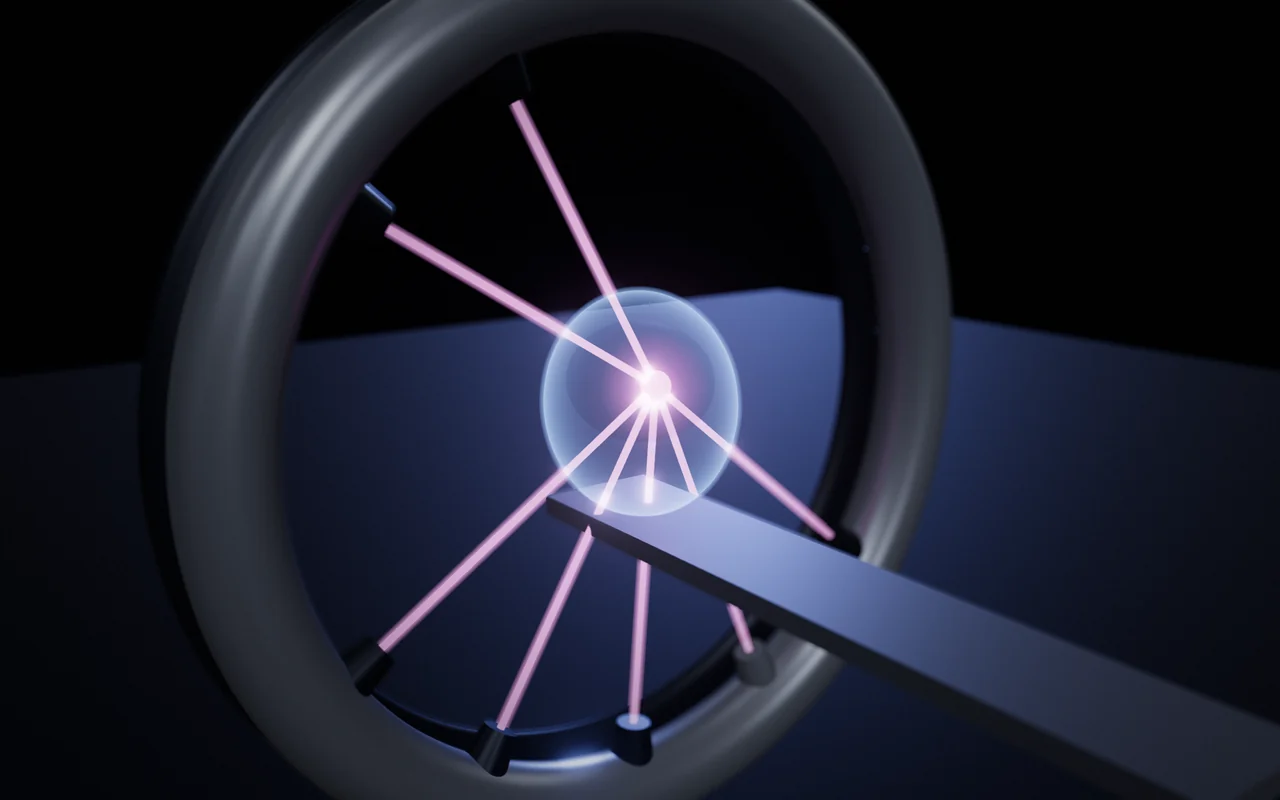
Image: Virtual Lab (3D illustration)
Proton therapy is one of the most precise forms of radiotherapy. X-rays pass right through the body, depositing energy in every tissue along the way, whereas protons release most of their energy just before they stop, at a set depth called the Bragg peak. That lets doctors focus the dose on the tumour.
Today the proton beam is usually delivered from a few fixed directions. In proton arc therapy the gantry rotates around the patient and aims the beam from many angles, choosing the proton energy separately for each direction.
The Trento Proton Therapy Centre team, working with RaySearch Laboratories, compared the new plans with the best existing ones. The arc plans covered the tumour equally well while lowering the average dose to nearby organs. Nine cancer patients were then treated with the technique.
Importantly, all treatments used the centre's existing equipment and normal workflow, with treatment times similar to conventional methods, which suggests other clinics could adopt it quickly.
 Try it in the labDosimetry3D lab on this site →Share on Telegram
Sources: Physics World · APSS Trento