Home › Nobel Prize laureates › 1996–2005 › 2002
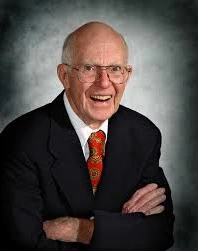
Raymond Davis Jr.
1914–2006 · USA
Prize motivation“for pioneering contributions to astrophysics, in particular for the detection of cosmic neutrinos”
Shared the prize with: Masatoshi Koshiba, Riccardo Giacconi
The discovery
At the centre of the Sun hydrogen turns into helium, producing enormous numbers of neutrinos. Neutrinos hardly interact with anything, so catching them is extremely hard.
In the 1960s Raymond Davis placed a tank holding 615 tonnes of cleaning fluid, tetrachloroethylene, about 1.5 km down the Homestake gold mine in the USA. Very rarely a neutrino strikes a chlorine atom and turns it into radioactive argon. Every few months Davis extracted and counted the argon atoms, finding about 2,000 in 30 years.
Masatoshi Koshiba built a huge water detector, Kamiokande, in the Kamioka mine in Japan. In February 1987 it recorded neutrinos from a supernova in the neighbouring Large Magellanic Cloud, the first neutrinos ever detected from beyond the Solar System.
Life
Born on 14 October 1914 in Washington, DC, he studied chemistry at the University of Maryland and earned his doctorate at Yale in 1942.
From 1948 he worked at Brookhaven National Laboratory and after retiring continued his experiment at the University of Pennsylvania. He died on 31 May 2006.
Where it is used today
Davis found that only a third of the expected neutrinos were arriving from the Sun. This “solar neutrino puzzle” was solved 30 years later, when neutrinos were found to change type on the way, a discovery that earned another Nobel Prize in 2015.
The neutrino astronomy they began continues today in giant detectors such as Super-Kamiokande and IceCube in Antarctica.
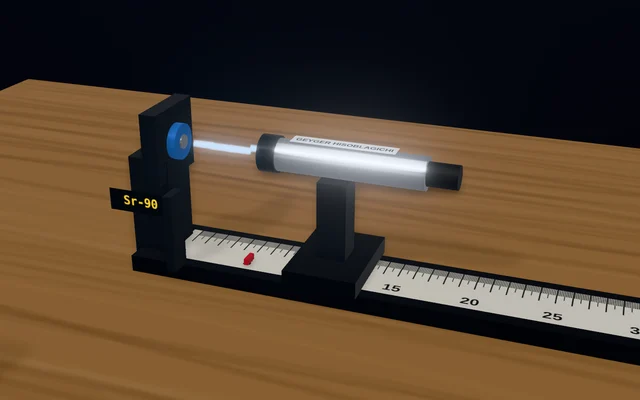 Try it in the labRadioactivity3D lab on this site →Share on Telegram
Sources: NobelPrize.org — 2002