Home › Nobel Prize laureates › 1996–2005 › 2002
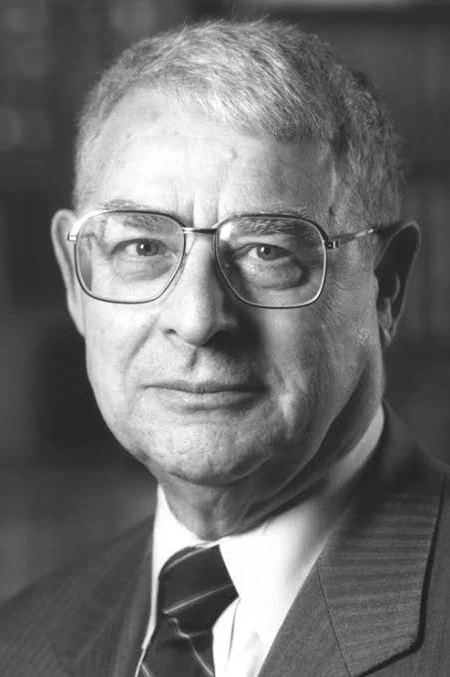
Riccardo Giacconi
1931–2018 · Italy / USA
Prize motivation“for pioneering contributions to astrophysics, which have led to the discovery of cosmic X-ray sources”
Shared the prize with: Raymond Davis Jr., Masatoshi Koshiba
The discovery
Earth's atmosphere absorbs all X-rays from space, so they can only be observed by instruments above it, on rockets and satellites.
In 1962 Riccardo Giacconi's group launched a rocket carrying X-ray detectors. In a flight of a few minutes they found a powerful X-ray source in the constellation Scorpius, Scorpius X-1, the first source beyond the Solar System, and also detected an X-ray glow coming from the whole sky.
In 1970 Giacconi led the launch of Uhuru, the first X-ray satellite, which found more than 300 sources, and in 1978 the first imaging X-ray telescope, the Einstein Observatory, began work. These observations revealed black holes and neutron stars in binary star systems.
Life
Born on 6 October 1931 in Genoa, Italy, he grew up in Milan, earned his doctorate at the University of Milan in 1954 and studied cosmic rays.
In 1956 he moved to the USA and took up X-ray astronomy at the company American Science and Engineering, later working at the Harvard-Smithsonian Center for Astrophysics and Johns Hopkins University. He died on 9 December 2018.
Where it is used today
Following Giacconi's ideas, NASA launched the Chandra X-ray Observatory in 1999, and it is still working. X-ray telescopes study black holes, supernova remnants and the million-degree gas in galaxy clusters.
The grazing-incidence mirrors that focus X-rays are also used in medical and industrial X-ray instruments.
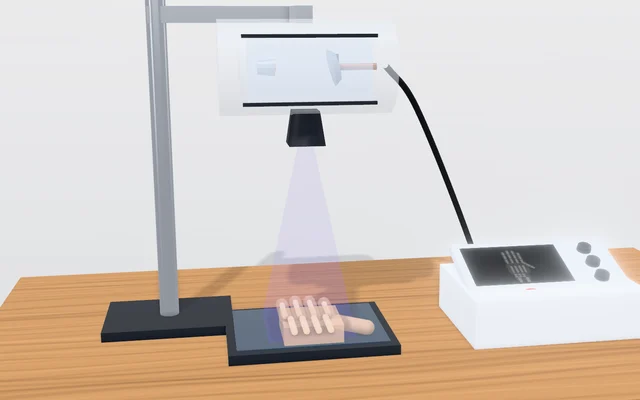 Try it in the labX-rays3D lab on this site →Share on Telegram
Sources: NobelPrize.org — 2002