Home › Nobel Prize laureates › 1996–2005 › 1998
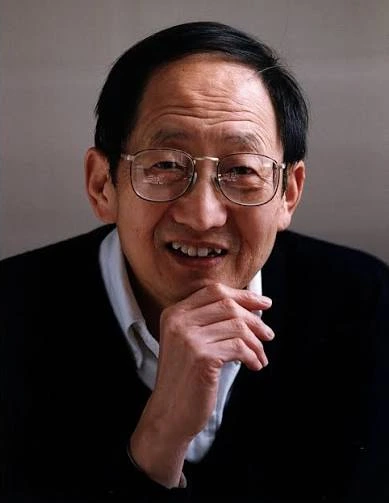
Daniel C. Tsui
born 1939 · USA
Prize motivation“for their discovery of a new form of quantum fluid with fractionally charged excitations”
Shared the prize with: Robert B. Laughlin, Horst L. Störmer
The discovery
In 1980 Klaus von Klitzing found that in a strong magnetic field at very low temperature, the resistance of a two-dimensional layer of electrons changes in exact steps. This is the integer quantum Hall effect.
In 1982 at Bell Labs, Daniel Tsui and Horst Störmer used an even stronger field and lower temperature and found unexpected new steps corresponding to fractions of the electron's charge, such as one third, even though an electron cannot be split.
In 1983 Robert Laughlin explained this: in a strong field the electrons together form a new quantum fluid, and disturbances in it behave like separate particles with less charge than an electron. Such fractional charges were later measured directly.
Life
Born on 28 February 1939 in a village in Henan province, China, he finished school in Hong Kong, studied at Augustana College in the USA and earned his doctorate at the University of Chicago in 1967.
He worked at Bell Labs from 1968 to 1982 and has been a professor at Princeton University since 1982.
Where it is used today
The quantum Hall effect is so exact that it serves as the international standard of electrical resistance.
Fractional quantum Hall states underlie the idea of topological quantum computers, which would store information in exotic particles that resist errors.
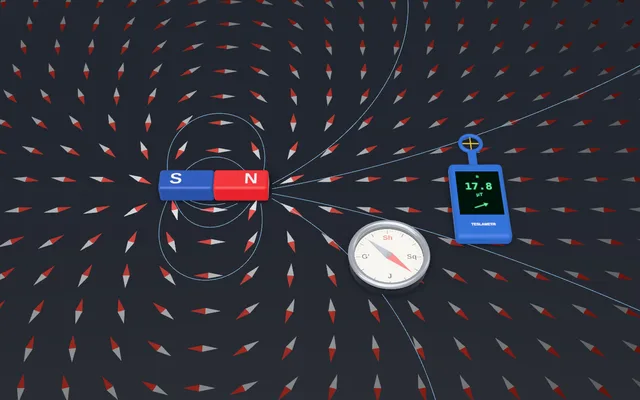 Try it in the labMagnetic field3D lab on this site →Share on Telegram
Sources: NobelPrize.org — 1998