Home › Nobel Prize laureates › 1996–2005 › 1998
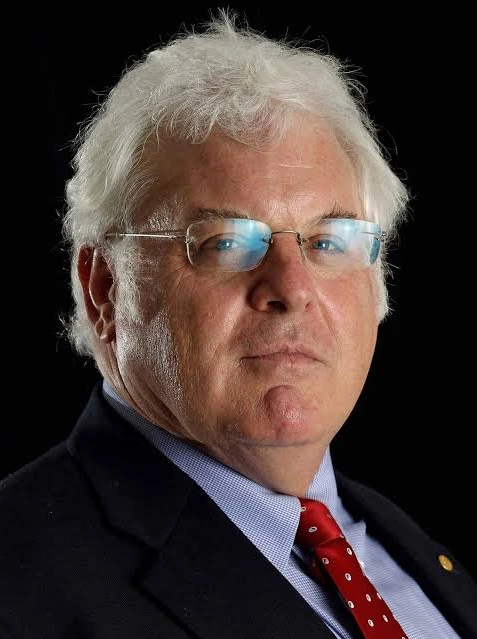
Robert B. Laughlin
born 1950 · USA
Prize motivation“for their discovery of a new form of quantum fluid with fractionally charged excitations”
Shared the prize with: Horst L. Störmer, Daniel C. Tsui
The discovery
In 1980 Klaus von Klitzing found that in a strong magnetic field at very low temperature, the resistance of a two-dimensional layer of electrons changes in exact steps. This is the integer quantum Hall effect.
In 1982 at Bell Labs, Daniel Tsui and Horst Störmer used an even stronger field and lower temperature and found unexpected new steps corresponding to fractions of the electron's charge, such as one third, even though an electron cannot be split.
In 1983 Robert Laughlin explained this: in a strong field the electrons together form a new quantum fluid, and disturbances in it behave like separate particles with less charge than an electron. Such fractional charges were later measured directly.
Life
Born on 1 November 1950 in Visalia, California, USA, he graduated from the University of California, Berkeley, and earned his doctorate at MIT in 1979.
He worked at Bell Labs and Lawrence Livermore National Laboratory, and has been a professor at Stanford University since 1985.
Where it is used today
The quantum Hall effect is so exact that it serves as the international standard of electrical resistance.
Fractional quantum Hall states underlie the idea of topological quantum computers, which would store information in exotic particles that resist errors.
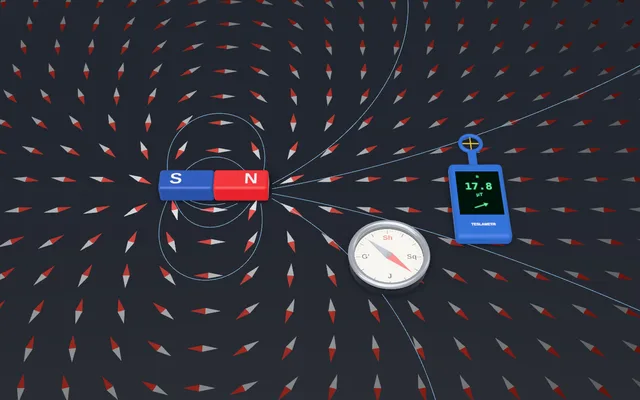 Try it in the labMagnetic field3D lab on this site →Share on Telegram
Sources: NobelPrize.org — 1998