Home › Nobel Prize laureates › 1996–2005 › 1997
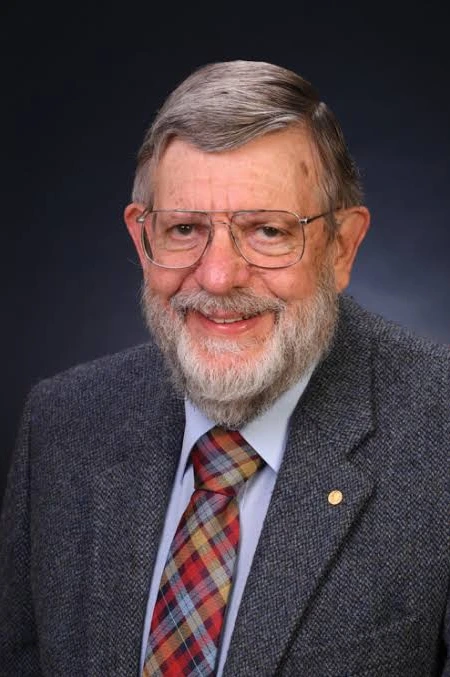
William D. Phillips
born 1948 · USA
Prize motivation“for development of methods to cool and trap atoms with laser light”
Shared the prize with: Steven Chu, Claude Cohen-Tannoudji
The discovery
At room temperature, air molecules fly at hundreds of metres per second. To study atoms precisely, they must be almost stopped, that is, cooled to very low temperatures.
When an atom absorbs a photon it gets a small kick in the photon's direction. With the laser frequency tuned just right, an atom absorbs photons only when moving towards the beam, so it slows down. In 1985 at Bell Labs, Steven Chu lit atoms from six directions with lasers and slowed them as if they were stuck in thick syrup, which was called “optical molasses”.
William Phillips measured that the atoms were even colder than theory predicted. Claude Cohen-Tannoudji and his group explained why and found ways to reach still lower temperatures, cooling atoms to millionths of a degree above absolute zero.
Life
Born on 5 November 1948 in Wilkes-Barre, Pennsylvania, USA, he graduated from Juniata College and earned his doctorate at MIT in 1976.
Since 1978 he has worked at the US National Bureau of Standards (now NIST) in Gaithersburg and teaches at the University of Maryland.
Where it is used today
Laser-cooled atoms are the basis of the world's most accurate atomic clocks, used in satellite navigation (GPS) and international timekeeping.
These methods also proved essential for making Bose–Einstein condensates, atom interferometers and quantum computers.
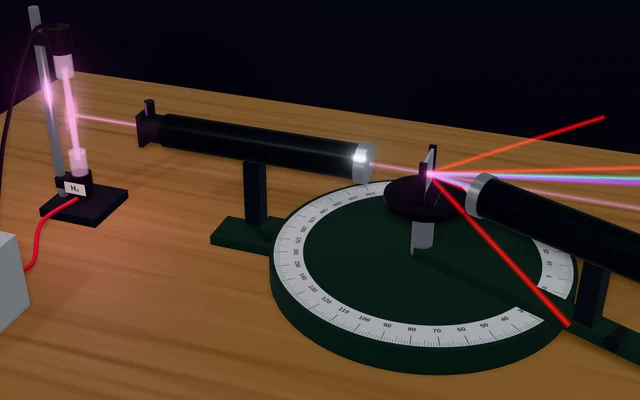 Try it in the labAtomic spectra3D lab on this site →Share on Telegram
Sources: NobelPrize.org — 1997