Home › Nobel Prize laureates › 1996–2005 › 1996
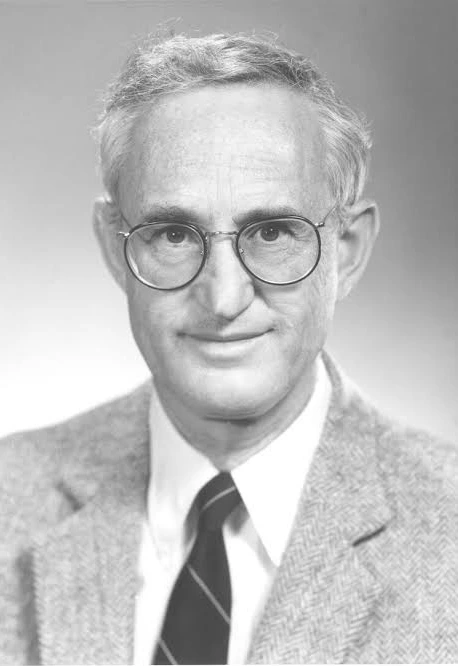
David M. Lee
born 1931 · USA
Prize motivation“for their discovery of superfluidity in helium-3”
Shared the prize with: Douglas D. Osheroff, Robert C. Richardson
The discovery
A superfluid flows with no internal friction at all: it slips through the tiniest holes and even creeps up the walls of its container. In ordinary helium-4 this was discovered in 1938.
Helium-3 atoms are a different kind of particle, so to become superfluid they must first pair up, which was expected to happen only at extremely low temperatures.
In 1971–72 at Cornell University, David Lee, Robert Richardson and doctoral student Douglas Osheroff were cooling helium-3 by compressing it. Osheroff noticed strange kinks in how the pressure changed, revealing that at about 2 millikelvin helium-3 passes into superfluid states.
Life
Born on 20 January 1931 in Rye, New York, USA, he graduated from Harvard and earned his doctorate at Yale in 1959.
From 1959 he worked at Cornell University, where he became a professor, and later taught at Texas A&M University.
Where it is used today
Superfluid helium-3 proved to be a very rich quantum system, in which quantum vortices and analogues of processes in the early universe can be studied in the laboratory.
The ultra-low-temperature techniques developed for this work are now also used to cool quantum computers.
 Try it in the labMelting and boiling3D lab on this site →Share on Telegram
Sources: NobelPrize.org — 1996