Home › Nobel Prize laureates › 1996–2005 › 1996
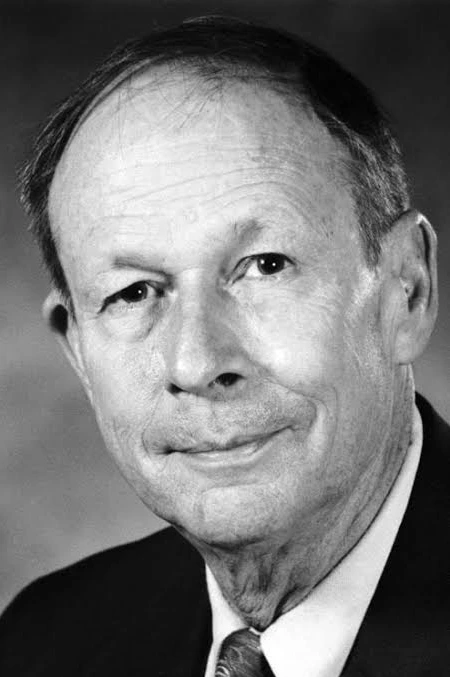
Robert C. Richardson
1937–2013 · USA
Prize motivation“for their discovery of superfluidity in helium-3”
Shared the prize with: David M. Lee, Douglas D. Osheroff
The discovery
A superfluid flows with no internal friction at all: it slips through the tiniest holes and even creeps up the walls of its container. In ordinary helium-4 this was discovered in 1938.
Helium-3 atoms are a different kind of particle, so to become superfluid they must first pair up, which was expected to happen only at extremely low temperatures.
In 1971–72 at Cornell University, David Lee, Robert Richardson and doctoral student Douglas Osheroff were cooling helium-3 by compressing it. Osheroff noticed strange kinks in how the pressure changed, revealing that at about 2 millikelvin helium-3 passes into superfluid states.
Life
Born on 26 June 1937 in Washington, DC, USA, he studied at Virginia Tech and earned his doctorate at Duke University in 1966.
From 1966 he worked at Cornell University, directing its physics laboratory and serving as vice provost for research. He died on 19 February 2013.
Where it is used today
Superfluid helium-3 proved to be a very rich quantum system, in which quantum vortices and analogues of processes in the early universe can be studied in the laboratory.
The ultra-low-temperature techniques developed for this work are now also used to cool quantum computers.
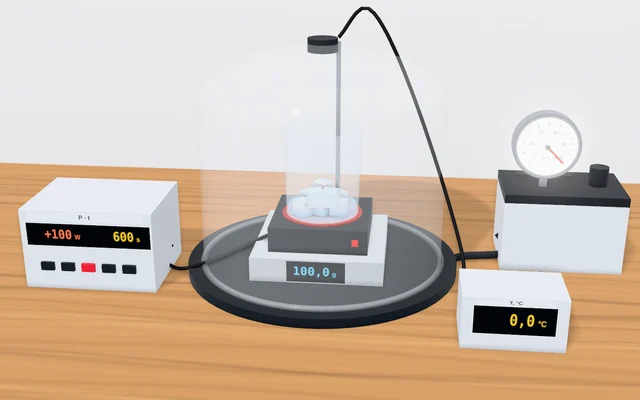 Try it in the labMelting and boiling3D lab on this site →Share on Telegram
Sources: NobelPrize.org — 1996