The “third kind” of magnetism: a small squeeze reveals a big clue
On 11 August Rice University announced the study, published in Advanced Materials.
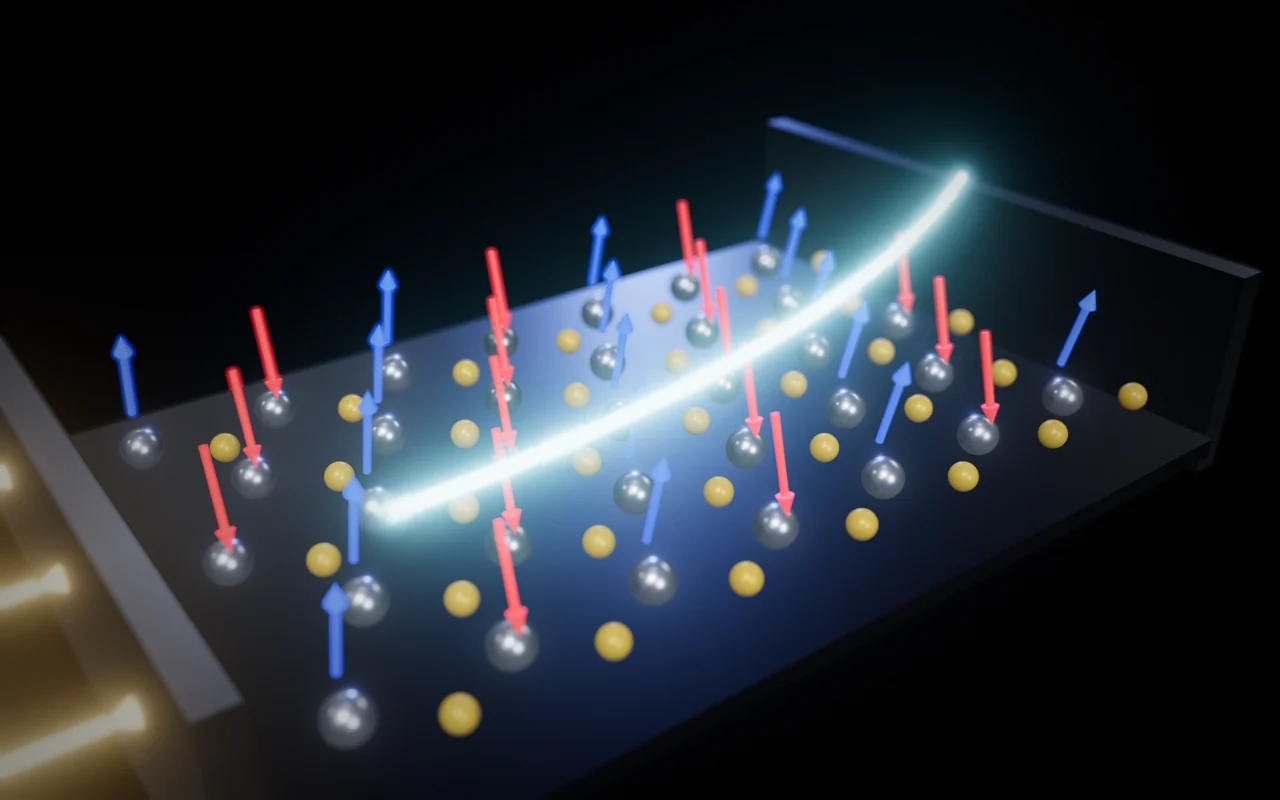
Image: Virtual Lab (3D illustration)
For a long time there were two main kinds of magnets. In ferromagnets such as iron, the atomic magnets point the same way and produce a strong outside field. In antiferromagnets, neighbouring magnets point in opposite directions and cancel out. Recently a third kind was identified: altermagnets.
In altermagnets the inner magnets also almost completely cancel, so there is no strong outside field. Yet they act on electrons passing through them like a ferromagnet, for example pushing an electric current sideways even without an external magnetic field. This is called the anomalous Hall effect.
Pengcheng Dai's team at Rice University slowly squeezed a crystal of hexagonal iron sulfide in one direction with a special device. As the pressure rose, the crystal's tiny leftover magnetic moment and its anomalous Hall effect weakened together. Neutron experiments at Oak Ridge National Laboratory showed that the underlying magnetic structure stayed the same; only the mix of magnetic orientations changed.
So the two effects share a common source and are tightly linked, and mechanical squeezing could be a simple way to tune such materials.
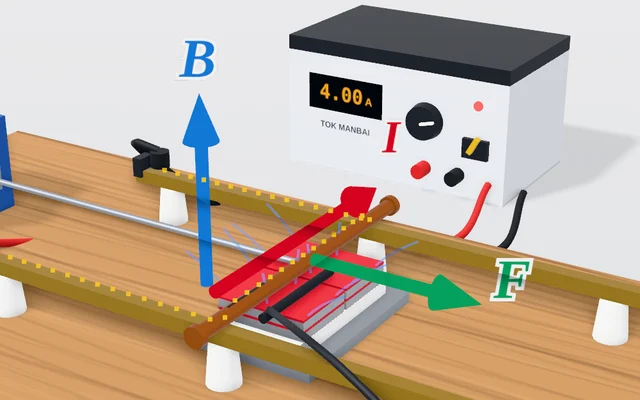 Try it in the labAmpère force3D lab on this site →Share on Telegram
Sources: Rice University