Life's building blocks found in samples from asteroid Bennu
On 29 January two papers were published in Nature and Nature Astronomy.
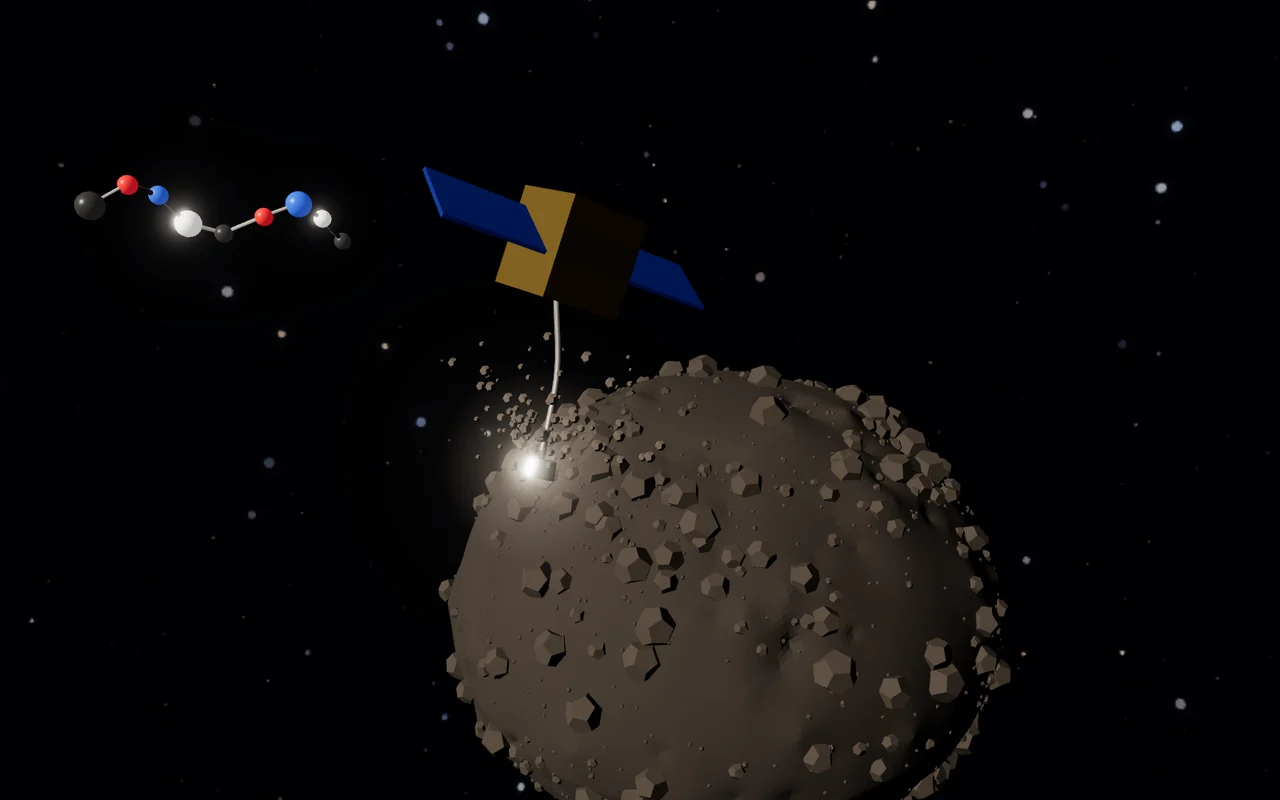
Image: Virtual Lab (3D illustration)
NASA's OSIRIS-REx spacecraft scooped dust and rock from the near-Earth asteroid Bennu in 2020 and brought 121.6 grams of it to Earth in 2023. The samples were kept sealed, so they were barely touched by Earth's air and moisture. After a year of analysis, the first major results have been announced.
The samples contain 14 of the 20 amino acids that life on Earth uses to build proteins, 19 non-biological amino acids, and all five bases of DNA and RNA. There is also plenty of ammonia and formaldehyde, which together can form amino acids, and around 10,000 nitrogen-bearing compounds in all.
The second paper is about salts, including sodium carbonate, phosphates, sulfates and chlorides, which formed when salty water evaporated on the larger parent body that Bennu came from. Such salts break down quickly in Earth's air, so they could only be seen in a sample brought straight from space.
Curiously, Bennu's amino acids come in “left-handed” and “right-handed” forms in nearly equal amounts, while life on Earth uses almost only the left-handed form. Scientists are now puzzling over what helped life start on Earth and what Bennu lacked.
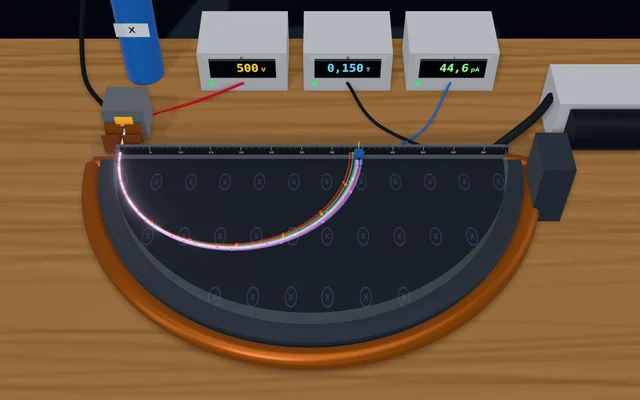 Try it in the labMass spectrometer3D lab on this site →Share on Telegram
Sources: Sci.News · Astronomy.com