Phosphorus, a key building block of life, found in Enceladus's ocean
The result was published in Nature on 14 June 2023, in work led by Frank Postberg of the Free University of Berlin.
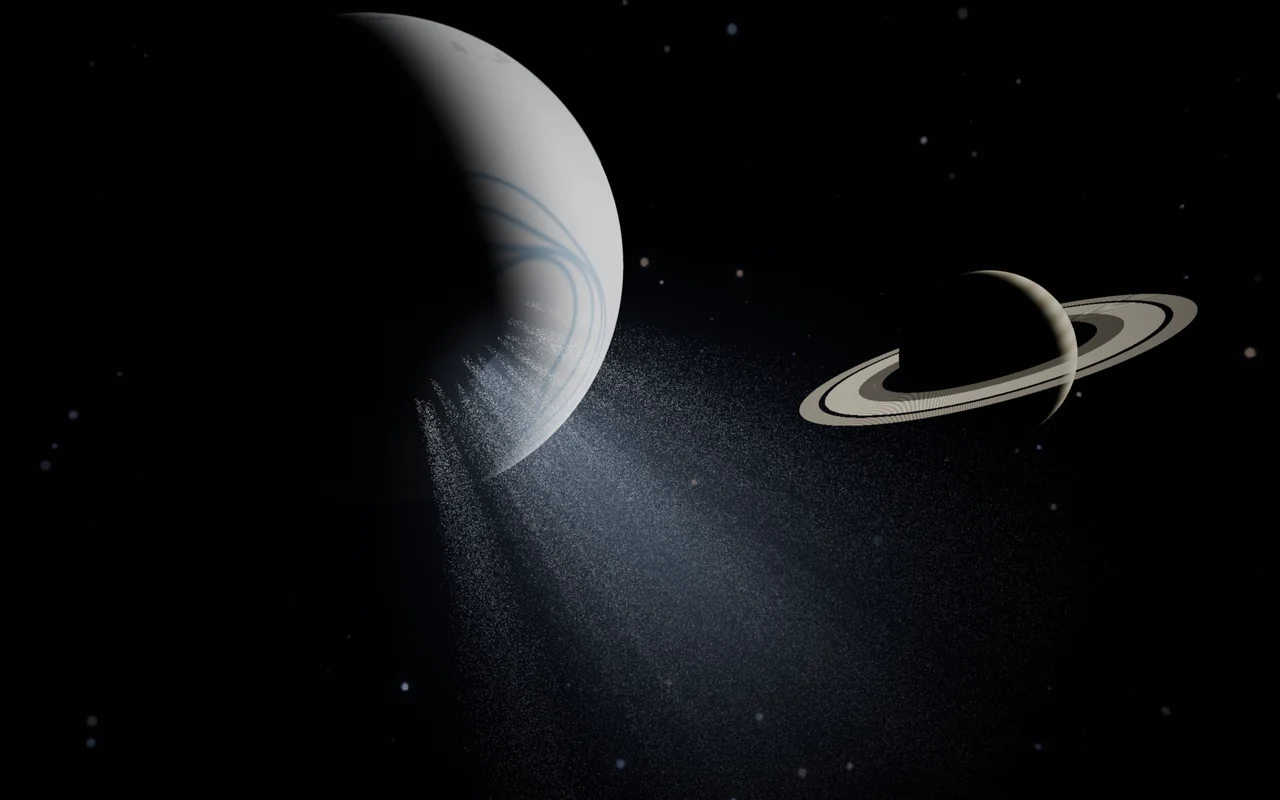
Image: Virtual Lab (3D illustration)
Enceladus is a small moon about 500 km across. Beneath its ice shell lies a salty ocean covering the whole moon, and from cracks at the south pole the ocean water erupts into space in giant plumes. Those ice grains form Saturn's faint E ring.
Between 2004 and 2017 the Cassini spacecraft flew through the plumes and the E ring many times. Its Cosmic Dust Analyzer was in effect a mass spectrometer that analysed individual ice grains, and in its archive the team found traces of sodium phosphates in one population of grains.
To check, they prepared various phosphate solutions in the lab and recreated the grain impacts. 'This was in perfect match with the data from space,' says Fabian Klenner. The calculations put phosphate levels in the ocean 100 to 1,000 times higher than in Earth's oceans.
Phosphorus forms the backbone of DNA and cell membranes, and it is found in bones. Of the six key elements of life — carbon, hydrogen, nitrogen, oxygen, phosphorus and sulphur — phosphorus is the rarest, and it was thought the hardest to find on Enceladus.
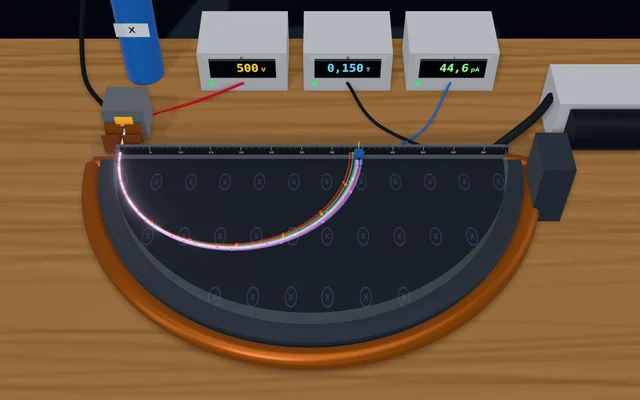 Try it in the labMass spectrometer3D lab on this site →Share on Telegram
Sources: University of Washington · Nature (DOI)