Gaia releases the most detailed Milky Way map yet: nearly 2 billion stars
Gaia DR3 was published on 13 June 2022, based on observations from July 2014 to May 2017.
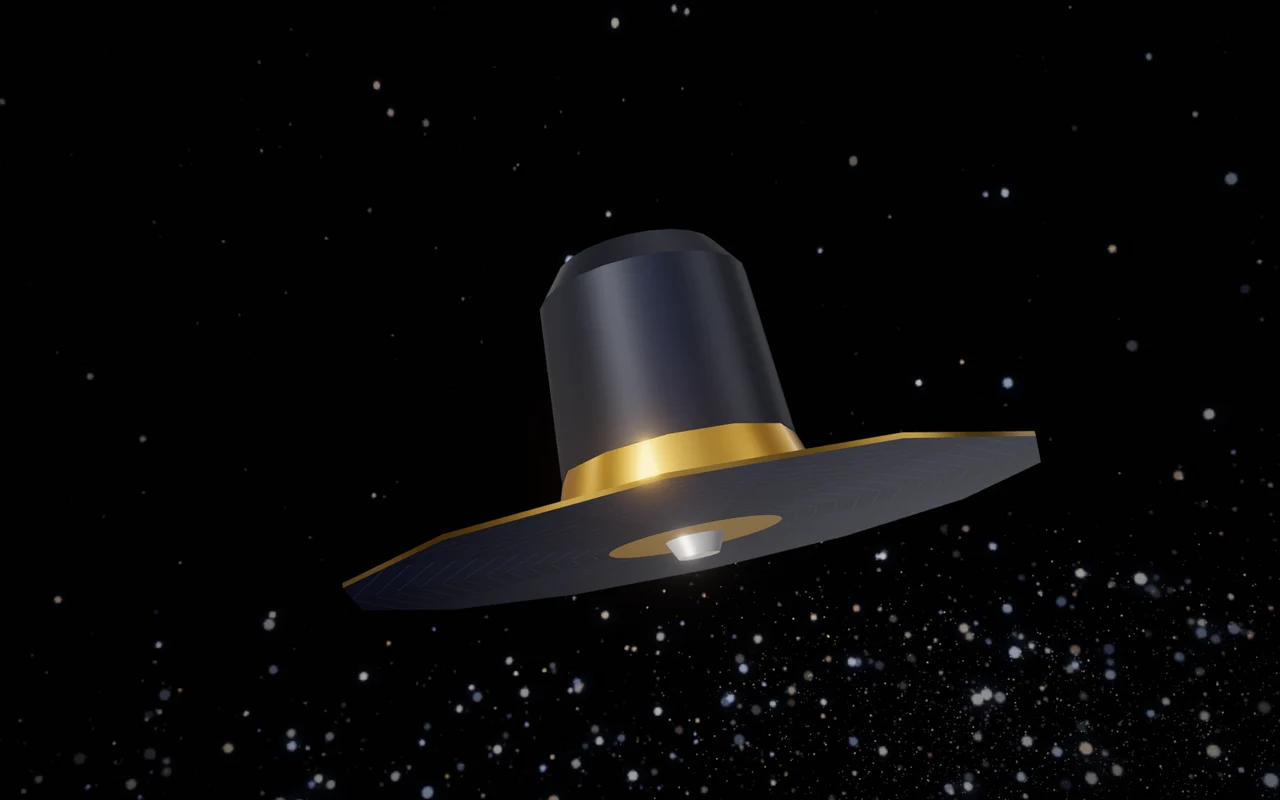
Image: Virtual Lab (3D illustration)
Launched in 2013, Gaia worked near L2, like Webb, scanning the sky again and again to measure every star's position with enormous precision. As Earth orbits the Sun, nearby stars appear to shift slightly against distant ones — parallax — and that shift gives their distance.
DR3 contains positions, distances and motions across the sky for 1.5 billion stars, plus speeds towards or away from us — measured with the Doppler effect — for 33 million. Temperatures, masses, ages and chemical make-up were derived for hundreds of millions, letting astronomers reconstruct the galaxy's history like archaeologists.
The biggest surprise was starquakes. Although not built to study them, Gaia spotted tsunami-like oscillations that change the shapes of thousands of stars — including some that, by current theory, shouldn't have any.
The release also includes the largest catalogue of binary stars, more than 150,000 asteroids and other solar-system bodies, and millions of galaxies and quasars — about 10 terabytes in all. Gaia ended science operations in 2025, but its data underpin an enormous number of studies.
 Try it in the labStanding waves3D lab on this site →Share on Telegram
Sources: ESA Gaia DR3 · Physics World