Earendel, the most distant single star ever seen: its light travelled 12.9 billion years
The result was published in Nature on 30 March 2022, in work led by Brian Welch of Johns Hopkins University.
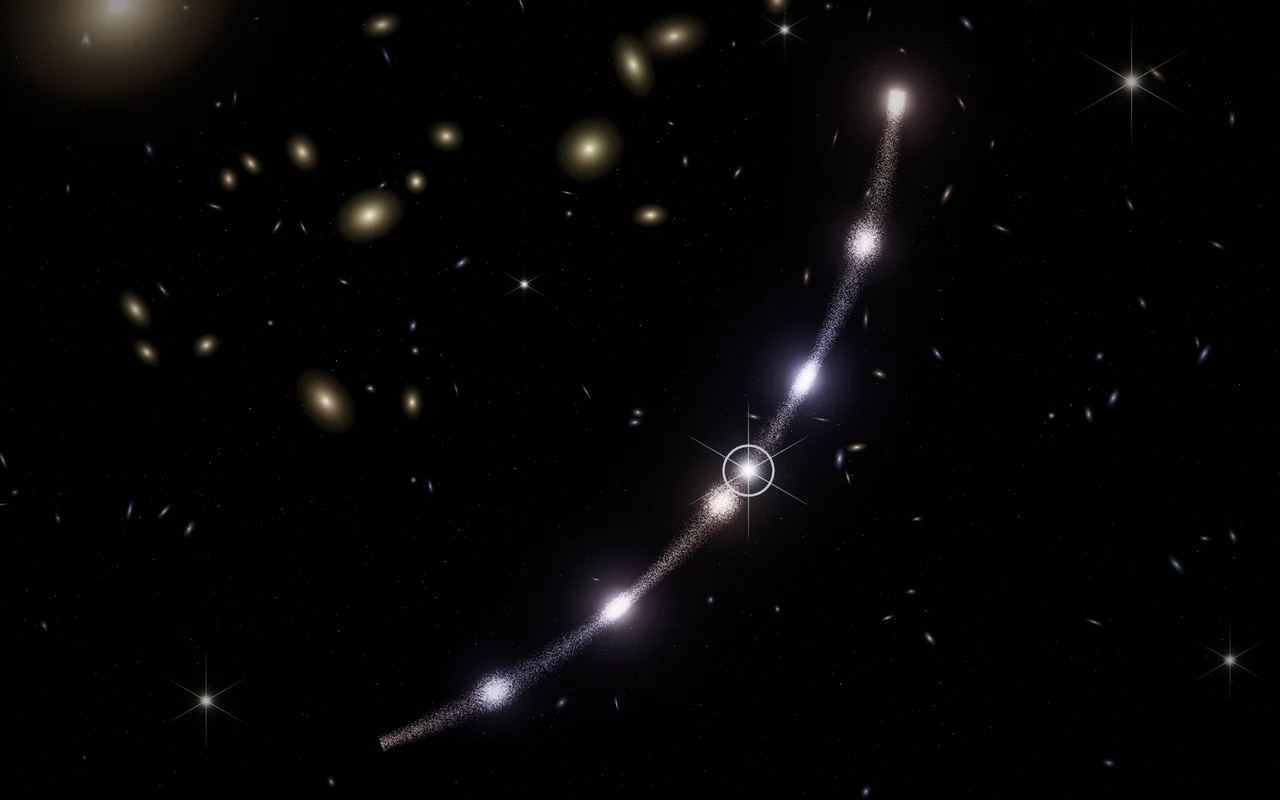
Image: Virtual Lab (3D illustration)
The star's official name is WHL0137-LS; Welch nicknamed it Earendel, Old English for 'morning star'. At redshift 6.2, its light set out about 900 million years after the Big Bang.
A gravitational lens made it visible. A massive foreground galaxy cluster warps space and stretches the light of a galaxy behind it into a magnified arc, dubbed the Sunrise Arc. Earendel sits right on the line of maximum magnification, boosting it thousands of times.
The previous record holder, a star called Icarus, sent light that travelled 9 billion years; Earendel is far more distant. 'We almost didn't believe it at first,' says Welch.
Earendel is estimated to be at least 50 times the Sun's mass and millions of times brighter. Such giants live fast, so it has long since exploded. Webb later observed it too, hinting at a fainter companion star.
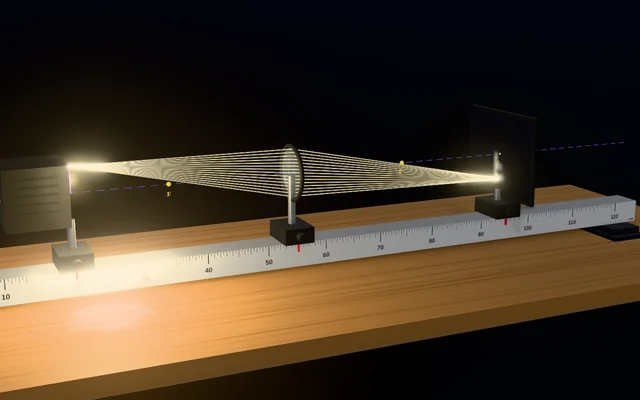 Try it in the labLenses and mirrors3D lab on this site →Share on Telegram
Sources: Astronomy · Scientific American