February 2027: Jupiter and Mars at their brightest
Jupiter reaches opposition on 11 February and Mars on 19 February.
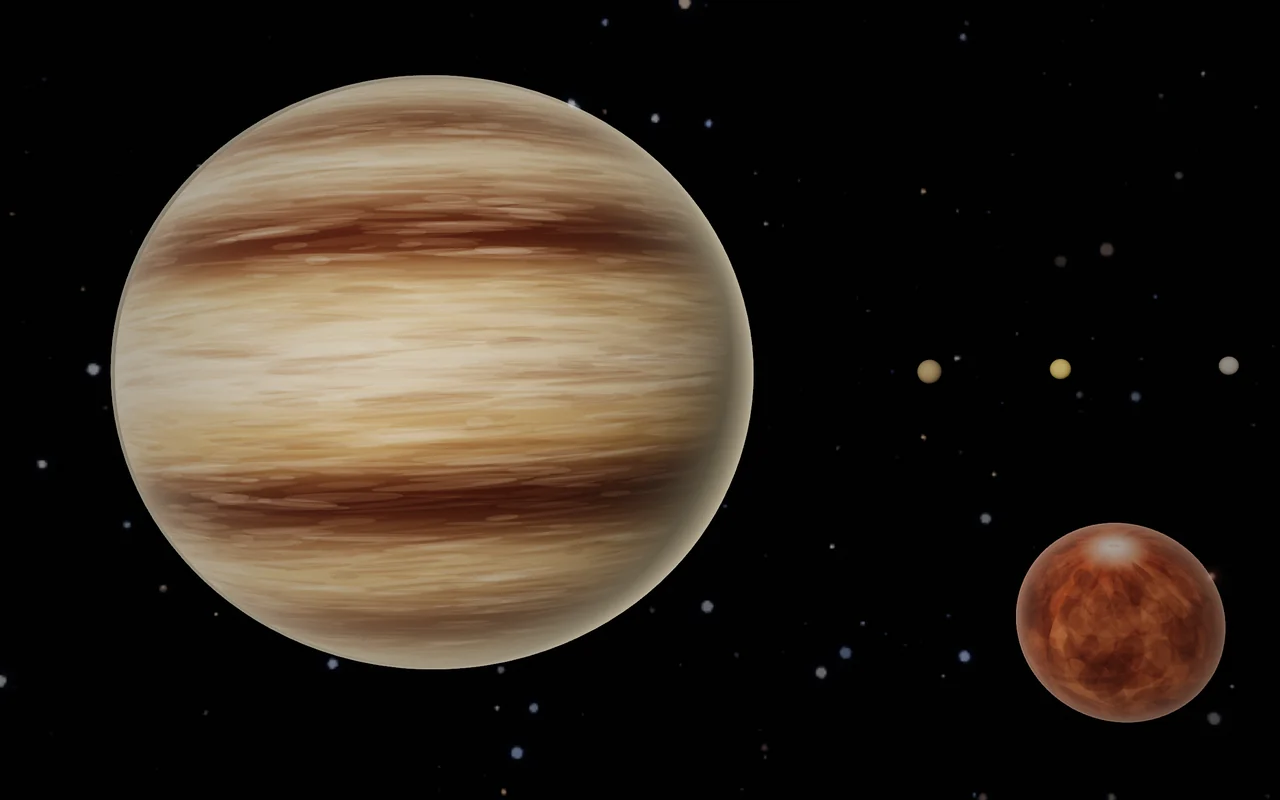
Image: Virtual Lab (3D illustration)
Opposition is when Earth passes between the Sun and an outer planet. The planet then sits opposite the Sun in the sky: it rises in the east at sunset, is visible all night and sets in the west at dawn. Being closest to Earth, it is at its brightest and largest in a telescope.
Jupiter reaches opposition on 11 February 2027, shining at magnitude −2.5 in the constellation Leo, brighter than anything else in the night sky except the Moon and Venus. On 10 February it will be closest to Earth, about 652 million kilometres away.
A week later, on 19 February, Mars reaches opposition too, so both bright planets can be watched all night: Jupiter shines a creamy white-yellow and Mars a reddish orange.
Ordinary binoculars show Jupiter's four big moons, Io, Europa, Ganymede and Callisto, as a row of tiny dots; Galileo discovered them in 1610. A small telescope reveals Jupiter's cloud belts. Watch the moons over several nights and you can sketch their orbits yourself.
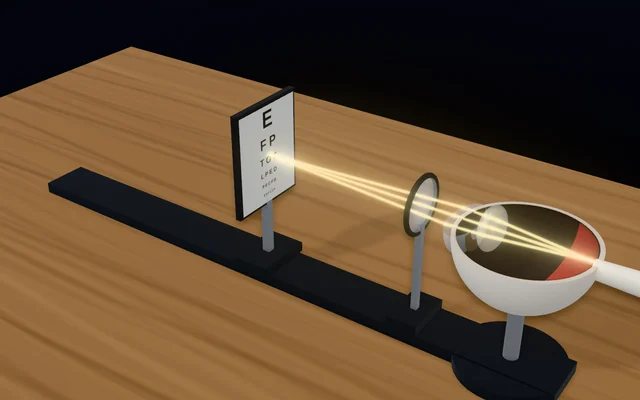 Try it in the labThe eye and optical instruments3D lab on this site →Share on Telegram