Voyager 1 is now one light-day from Earth
According to NASA, Voyager 1 reached this distance on 18 November 2026 at 10:16 UTC.
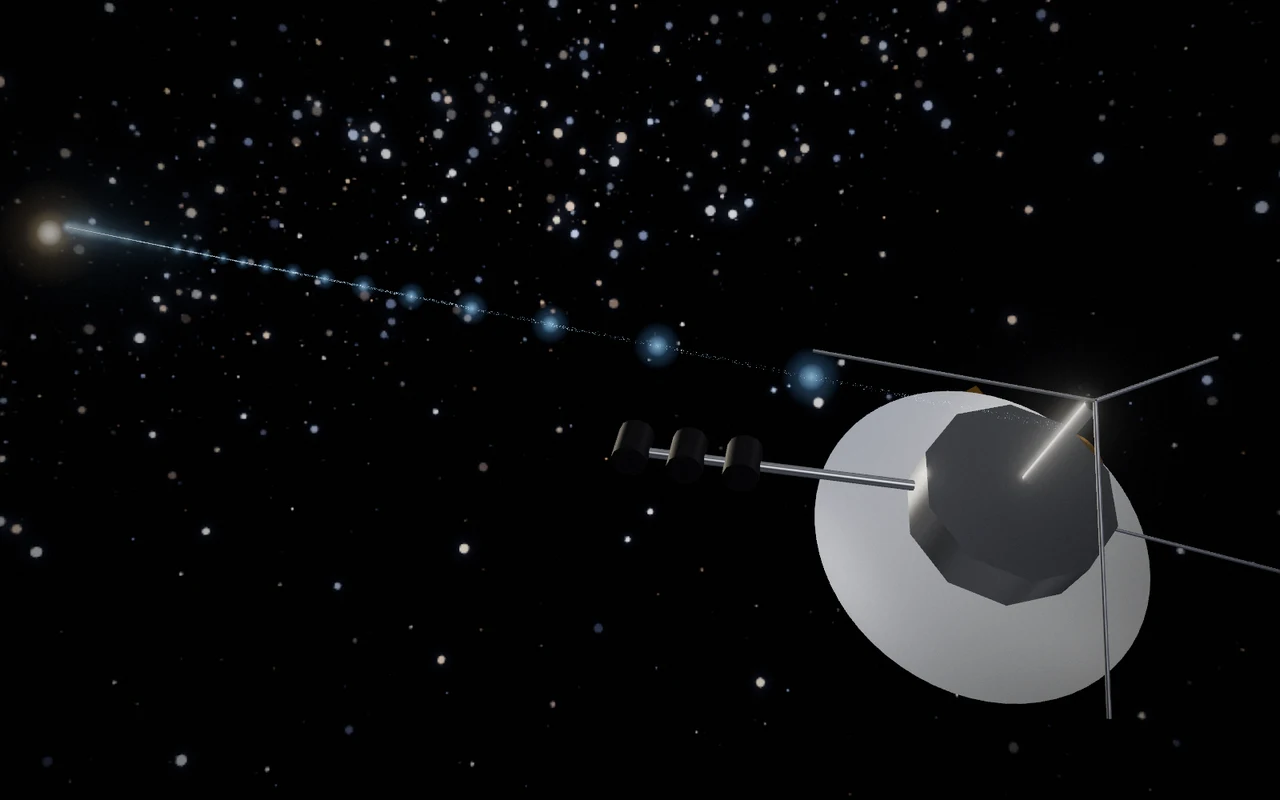
Image: Virtual Lab (3D illustration)
Light is the fastest thing there is, covering 300,000 kilometres every second. Sunlight reaches Earth in 8 minutes 20 seconds, and light from Neptune in a little over 4 hours. The distance light travels in a day is called a 'light-day' — about 25.9 billion kilometres.
Voyager 1 launched on 5 September 1977. It flew past Jupiter and Saturn, headed for the edge of the Solar System and in 2012 crossed the boundary of the solar wind into interstellar space. On 18 November 2026 its distance from Earth reached 25,902,068,356 kilometres — exactly one light-day. It took 49 years, 2 months and 11 days.
Every command sent from Earth now takes a full day to reach Voyager 1, and its reply takes another day to come back. So asking the probe a question and hearing the answer takes two days. Even so, the probe is still working and sending data about interstellar space.
Voyager 1 carries the Golden Record, with sounds and images of Earth. Even after contact is finally lost, the record will remain humanity's silent ambassador in the cosmos.
 Try it in the labArtificial satellite3D lab on this site →Share on Telegram
Sources: NASA · NASA Science · EarthSky