The first green star has been found
Astronomers at the University of Warwick have found a white dwarf that would look green to the human eye.
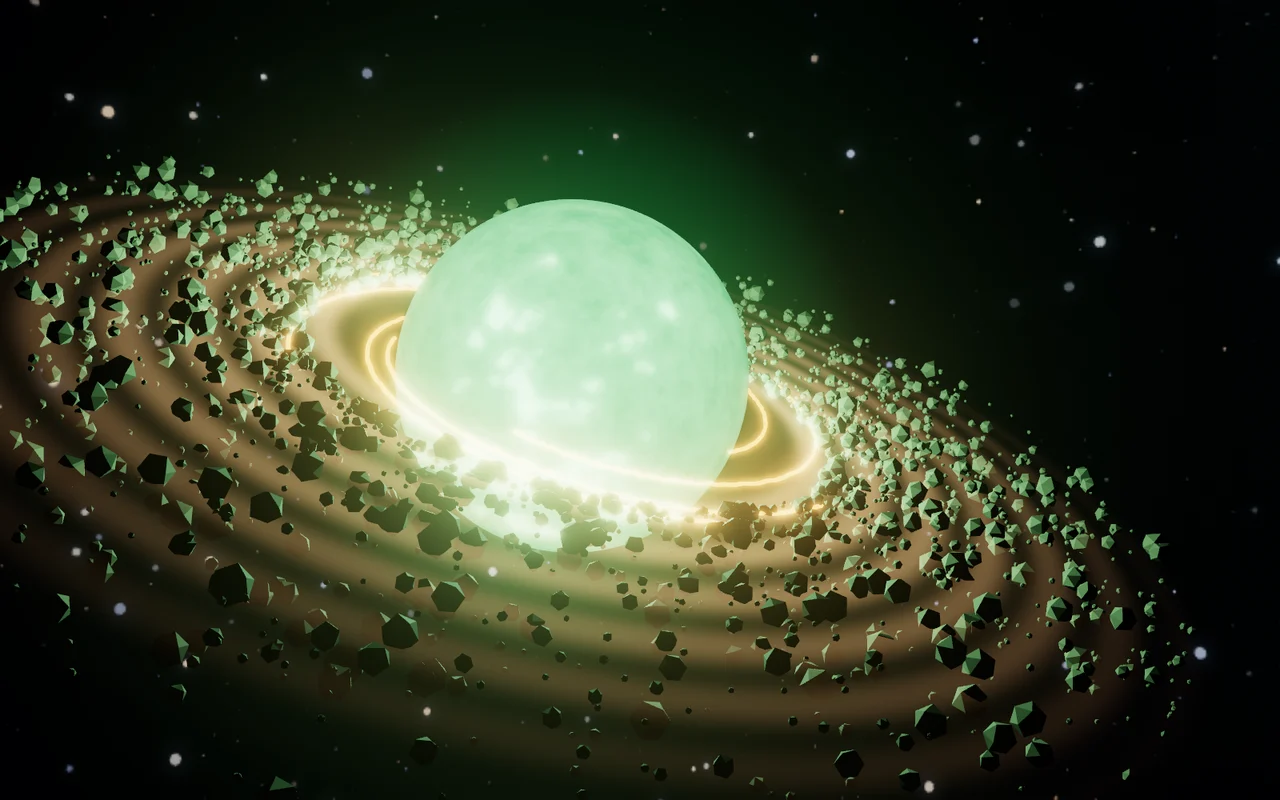
Image: Virtual Lab (3D illustration)
Stars come in red, yellow, white or blue, but no green star had ever been found. A team at the University of Warwick (UK) led by Mark Hollands ran the light of 152 nearby white dwarfs through a model of human colour vision. Five turned out to have unusual colours: green, pink, purple, yellow and cyan.
The white dwarf WD J1330+6435 is the first star that would look green to us. Its very dense atmosphere has been polluted by sodium-rich rocks from its own planetary system. There, helium atoms keep jostling the sodium atoms, and quantum effects make sodium absorb a broad band of yellow, orange and some red light. What is left looks green to the eye. The results were published on 15 October in RAS Techniques and Instruments.
A white dwarf is what is left of a Sun-like star once its fuel runs out. It is about the size of Earth but has nearly the mass of the Sun, so its matter is incredibly dense: a teaspoon of it weighs several tonnes. In billions of years our Sun will become a white dwarf too.
Why are there no green stars in the sky? A hot star shines in every colour and looks white, a cooler one looks reddish. To look green, the red and yellow parts of the spectrum would have to be cut out. Ordinary stars never do this, but in this white dwarf sodium does exactly that.
 Try it in the labColour vision3D lab on this site →Share on Telegram
Sources: Physics World · EarthSky