Record X-ray flashes squeezed into a spot 100,000 times smaller than a hair
European XFEL scientists have set a world record in intensity for hard-X-ray attosecond pulses.
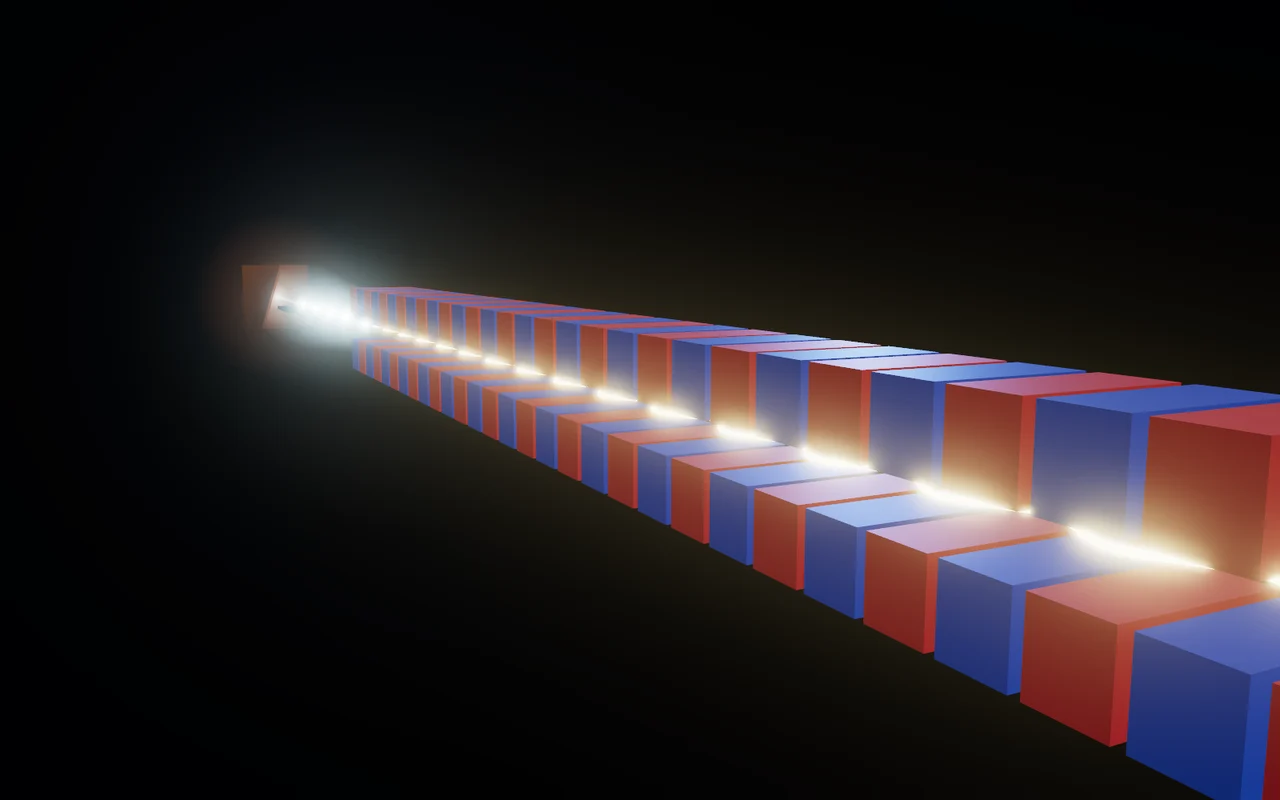
Image: Virtual Lab (3D illustration)
European XFEL near Hamburg is one of the world's largest X-ray lasers, 3.4 kilometres long. Electrons are accelerated almost to the speed of light and then pass through an undulator, a row of magnets with alternating poles. Inside it the electrons wiggle like a snake and give off extremely bright X-rays.
In the new experiment the team produced flashes lasting about 300 attoseconds. An attosecond is a billionth of a billionth of a second (10⁻¹⁸ s). Two ultra-smooth mirrors then focused the light into a spot of about 180 × 330 nanometres, roughly 100,000 times smaller than the cross-section of a human hair.
The peak intensity exceeded 10²⁰ watts per square centimetre, a world record for hard-X-ray attosecond pulses. The experiment was carried out in April 2026 and published in October in the journal Optica; the first author is Ichiro Inoue of the University of Tokyo.
To check the intensity, the beam was aimed at a copper foil. The X-rays knocked electrons out of the inner shells of copper atoms; other electrons dropped into the gaps and emitted light of their own. This emission reached a saturation that only happens at extremely high intensity, independently confirming the calculations.
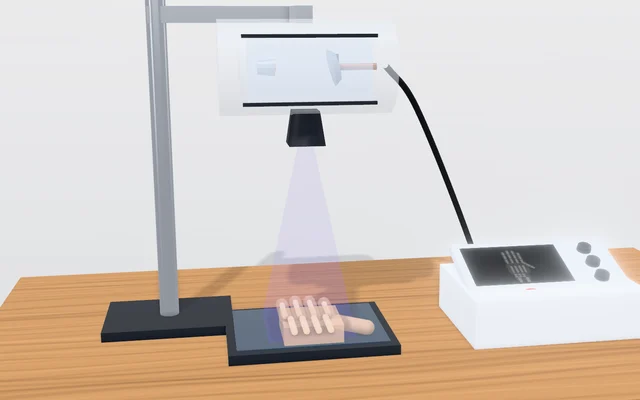 Try it in the labX-rays3D lab on this site →Share on Telegram
Sources: European XFEL / idw · SciTechDaily