CERN sees gluons crowding inside atomic nuclei
The results were published in Physical Review Letters on 29 July and announced on 11 August.
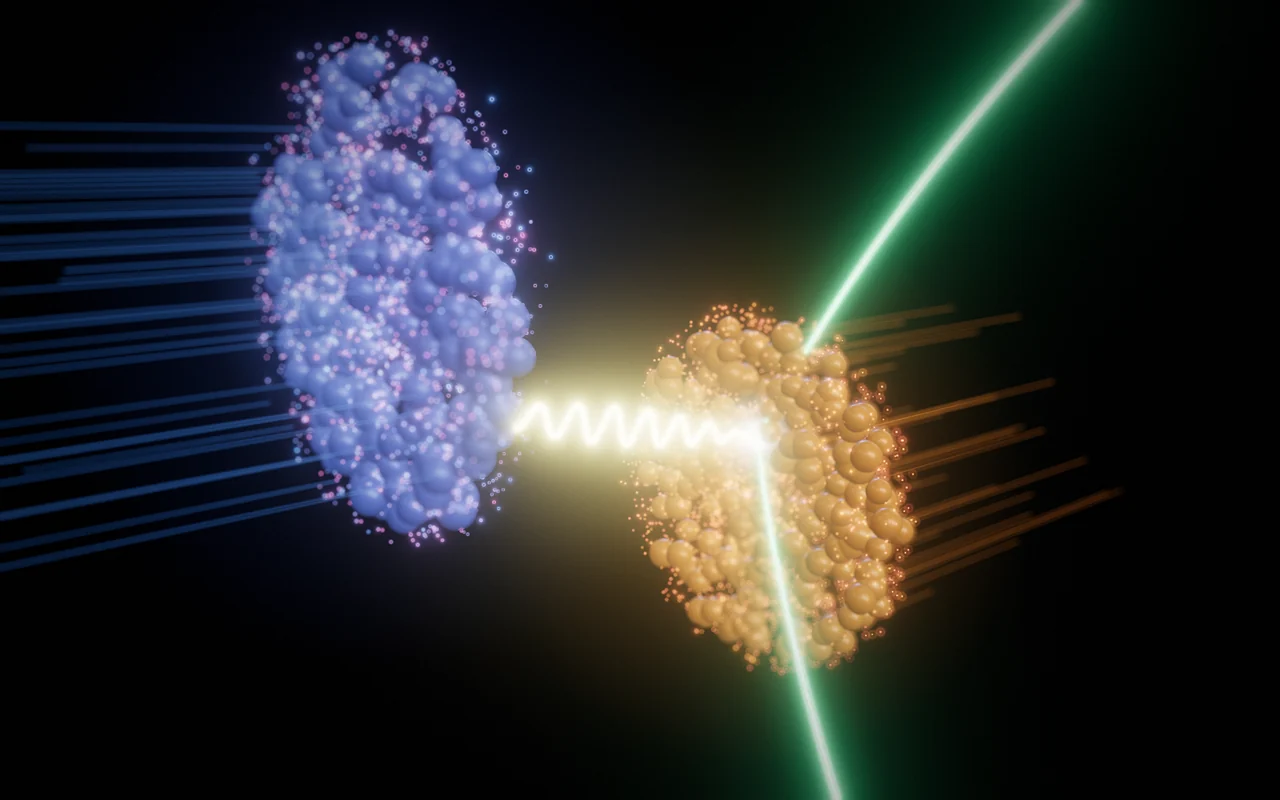
Image: Virtual Lab (3D illustration)
Protons and neutrons are made of quarks, which are glued together by gluons, the carriers of the strong force. Most of a proton's mass comes from energy tied to them. At high energies, the number of gluons inside protons and nuclei rises quickly.
Theory says gluons cannot multiply forever: at a certain density they start merging and their number stops growing. This is called gluon saturation. A rival explanation, nuclear shadowing, describes a similar effect differently, and telling them apart has been hard.
ALICE used collisions in which lead nuclei fly past each other without touching. The strong electromagnetic field around them acts like a beam of high-energy photons. A photon strikes the other nucleus and creates a J/ψ particle whose properties reveal how gluons are spread inside. The finest measurement resolved structures about a quarter the size of a proton.
At the smallest scales J/ψ production grew more slowly than expected, a pattern that matches models including gluon saturation. It is not yet a final discovery, but it shows for the first time that the two rival theories can be separated by experiment.
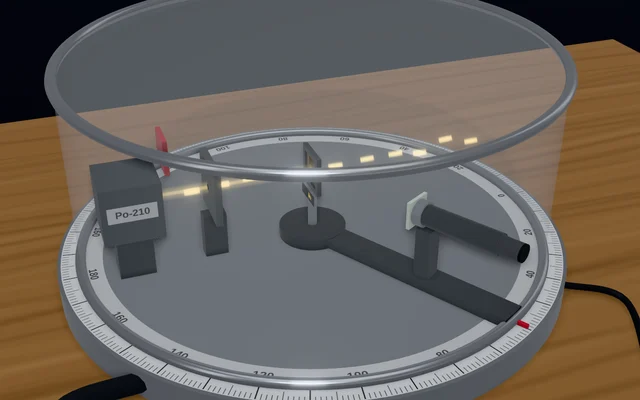 Try it in the labRutherford scattering3D lab on this site →Share on Telegram
Sources: University of Kansas · Sci.News