Artemis II: humans have never been this far from Earth
On 10 April the Artemis II crew returned from the first crewed lunar voyage in over half a century.
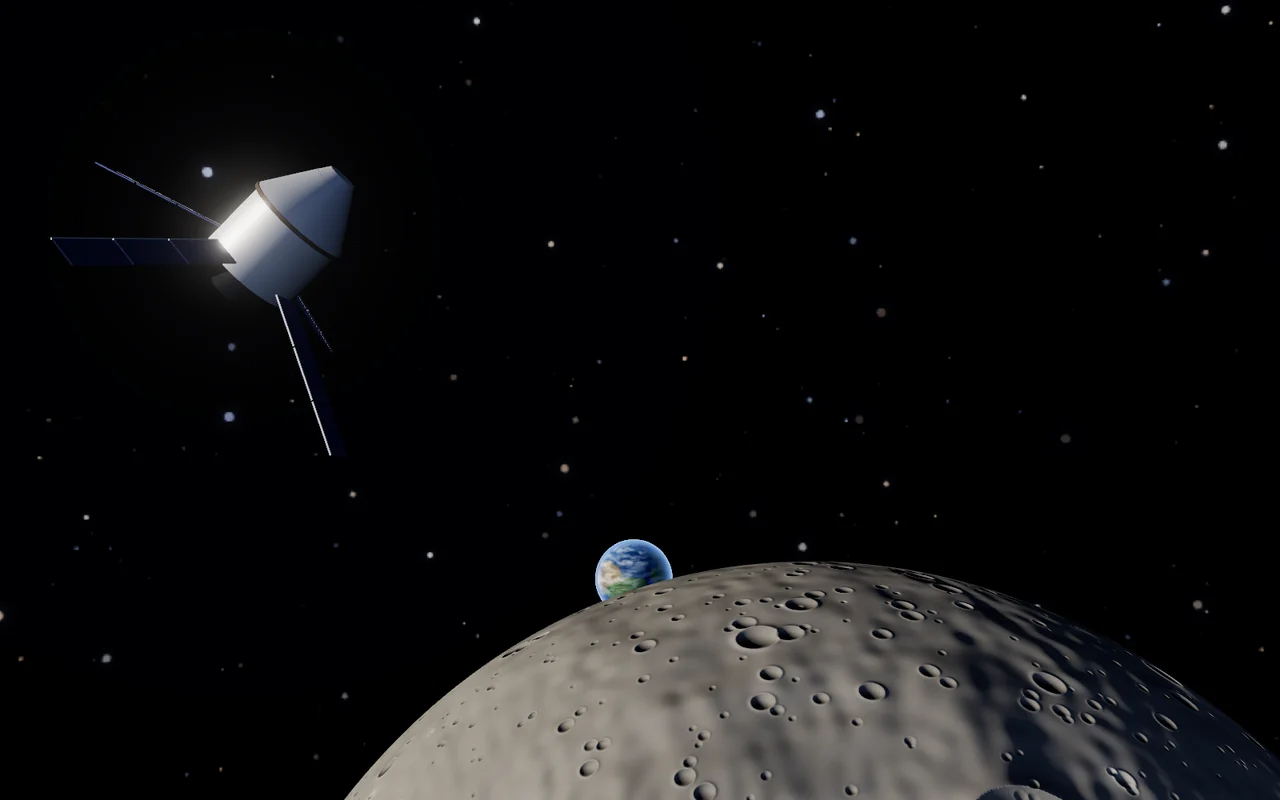
Image: Virtual Lab (3D illustration)
Artemis II launched on 1 April from Kennedy Space Center in Florida with NASA astronauts Reid Wiseman (commander), Victor Glover (pilot) and Christina Koch, and Canadian Space Agency astronaut Jeremy Hansen. It was the first human trip to the Moon since Apollo 17 in 1972.
On 6 April the spacecraft swung around the far side of the Moon and reached a record 406,771 kilometres from Earth, beating the 400,171 km set by Apollo 13 in 1970. The astronauts saw regions of the far side never seen by human eyes, photographed Earth setting behind the lunar horizon and watched a total solar eclipse from space.
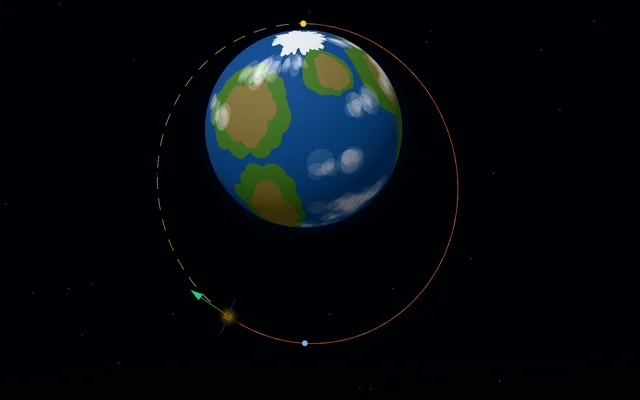
The flight followed a “free-return” trajectory: the Moon's gravity itself bends the ship's path and sends it back towards Earth. This is the route that saved the Apollo 13 crew in 1970, and it means the ship can get home even if its engine fails.
On the way back Orion hit the atmosphere at about 11 kilometres per second, nearly 40,000 km/h. Its heat shield glowed at thousands of degrees, and parachutes slowed it to about 30 km/h before it splashed down in the Pacific near San Diego on 10 April. NASA now plans to land astronauts on the Moon with Artemis III in 2028.
 Try it in the labArtificial satellite3D lab on this site →Share on Telegram
Sources: ScienceAlert · AP / OPB