The 2025 Nobel Prize: a quantum world you can hold in your hand
On 7 October the Royal Swedish Academy of Sciences announced the 2025 physics laureates.
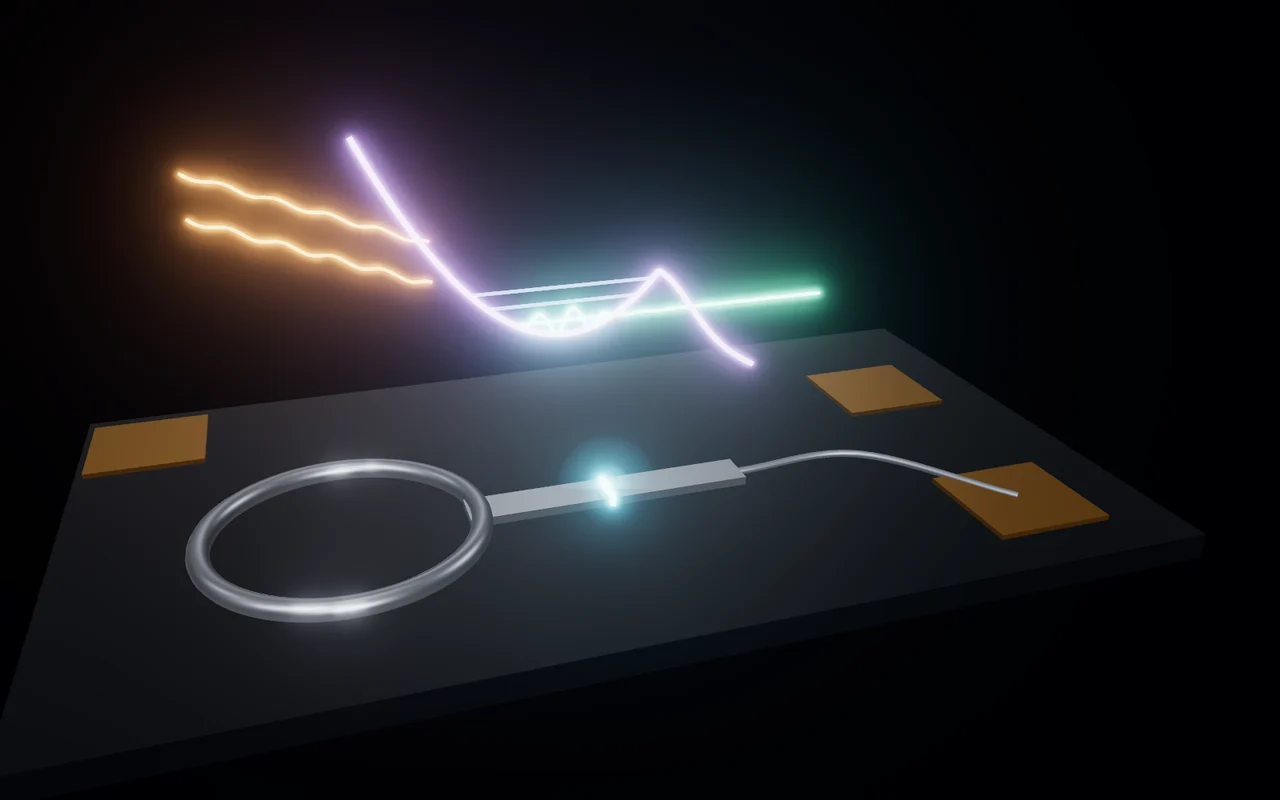
Image: Virtual Lab (3D illustration)
The prize was awarded “for the discovery of macroscopic quantum mechanical tunnelling and energy quantisation in an electric circuit” to John Clarke of the University of California, Berkeley, Michel Devoret of Yale University and UC Santa Barbara, and John Martinis of UC Santa Barbara. They share the 11 million Swedish kronor equally.
Quantum mechanics usually describes the world of tiny particles such as atoms and electrons, where a particle can “leak” through a barrier (tunnelling) and its energy can only take certain values (quantisation). Big objects do not behave this way: a ball does not pass through a wall.
In 1984–85 at Berkeley the three experimented with a superconducting circuit containing a Josephson junction, a very thin insulator between two superconductors. Billions of electron pairs moved through it like one big particle. The circuit escaped its zero-voltage state by tunnelling and absorbed microwaves only in specific energy packets, just like an atom.
Clarke called the news “the surprise of my life”. Olle Eriksson, chair of the Nobel Committee for Physics, stressed that quantum mechanics is the foundation of all digital technology. The prize will be presented in Stockholm on 10 December.
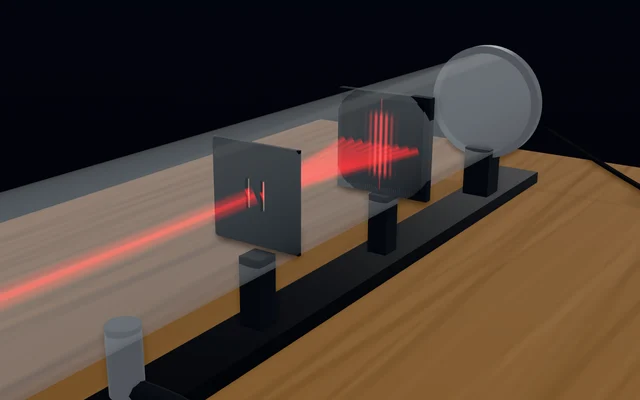 Try it in the labQuantum interference3D lab on this site →Share on Telegram
Sources: Physics World · Live Science