A quantum computer beats a supercomputer 13,000-fold, and the result can be checked
On 22 October the Google Quantum AI team published its paper in Nature.
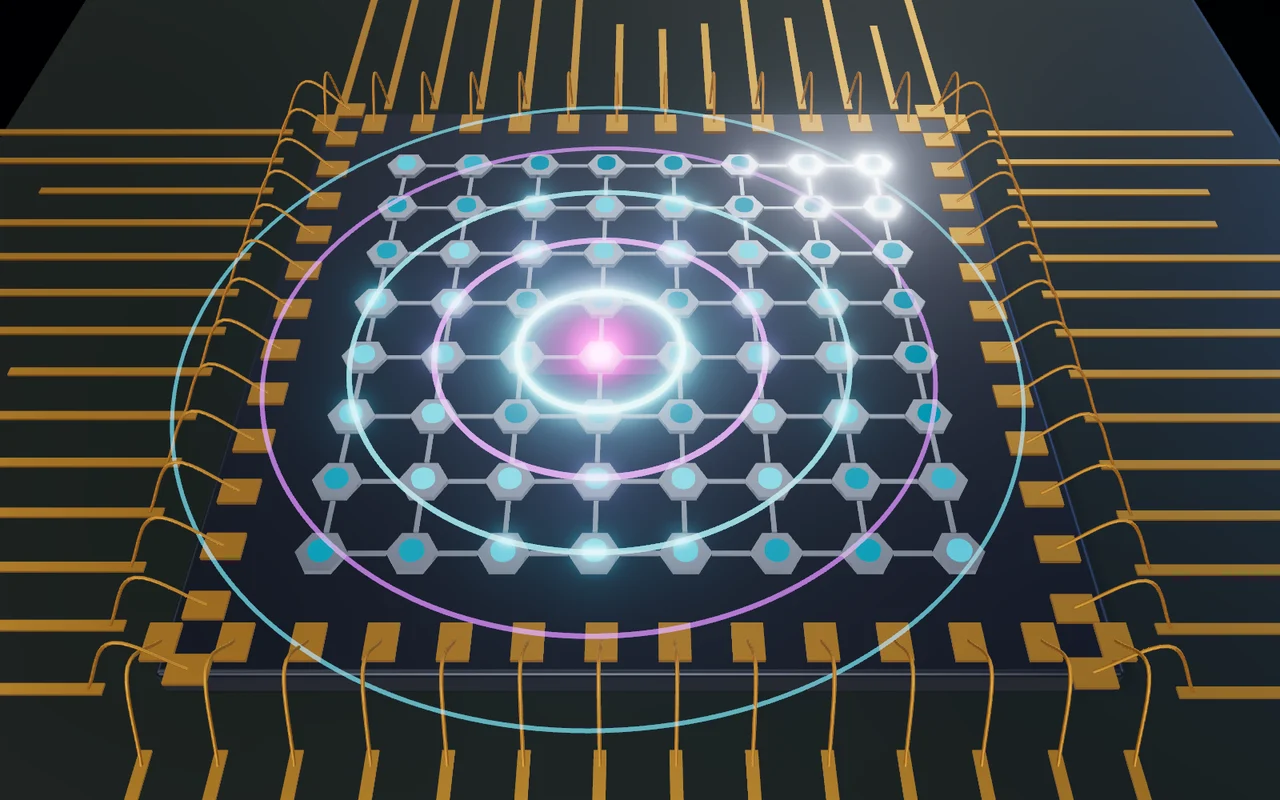
Image: Virtual Lab (3D illustration)
An ordinary computer works with bits, 0 or 1. The qubits of a quantum computer can be in a “mixture” of 0 and 1 at once and become entangled with each other, which lets them solve some problems far faster. Google's Willow processor has 105 superconducting qubits.
The new algorithm works like an echo. A series of operations is run on the qubits, one qubit is gently “nudged”, and then all the operations are run exactly in reverse. Without the nudge the system would return to its starting state; the returning “echo” reveals how the disturbance spread through the whole system. Physicists call this quantity an out-of-time-order correlator (OTOC).
The experiment used 65 qubits and 23 layers of operations. According to Google, Willow did the calculation about 13,000 times faster than the best classical algorithm on one of the world's fastest supercomputers. Unlike earlier quantum-advantage demonstrations, the result is a specific number that can be measured again on another quantum computer of similar quality.
In a separate experiment with the University of California, Berkeley, the method was applied to working out molecular structure from nuclear magnetic resonance (NMR) data. The researchers call it a “molecular ruler”, because it can measure distances between atoms farther than ordinary methods.
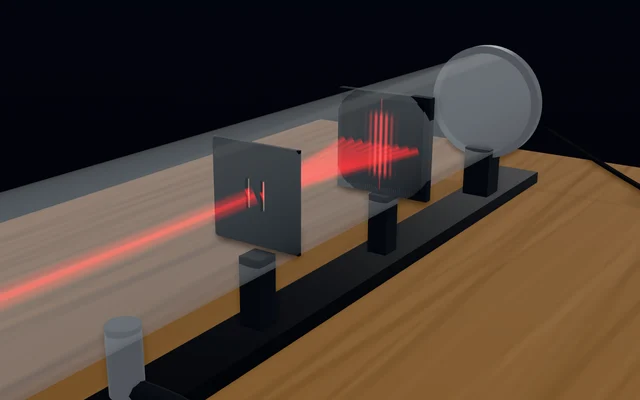 Try it in the labQuantum interference3D lab on this site →Share on Telegram
Sources: Google Research · Google