Muon g−2 delivers its final, most precise measurement
On 3 June the Muon g−2 collaboration announced its third and final result.
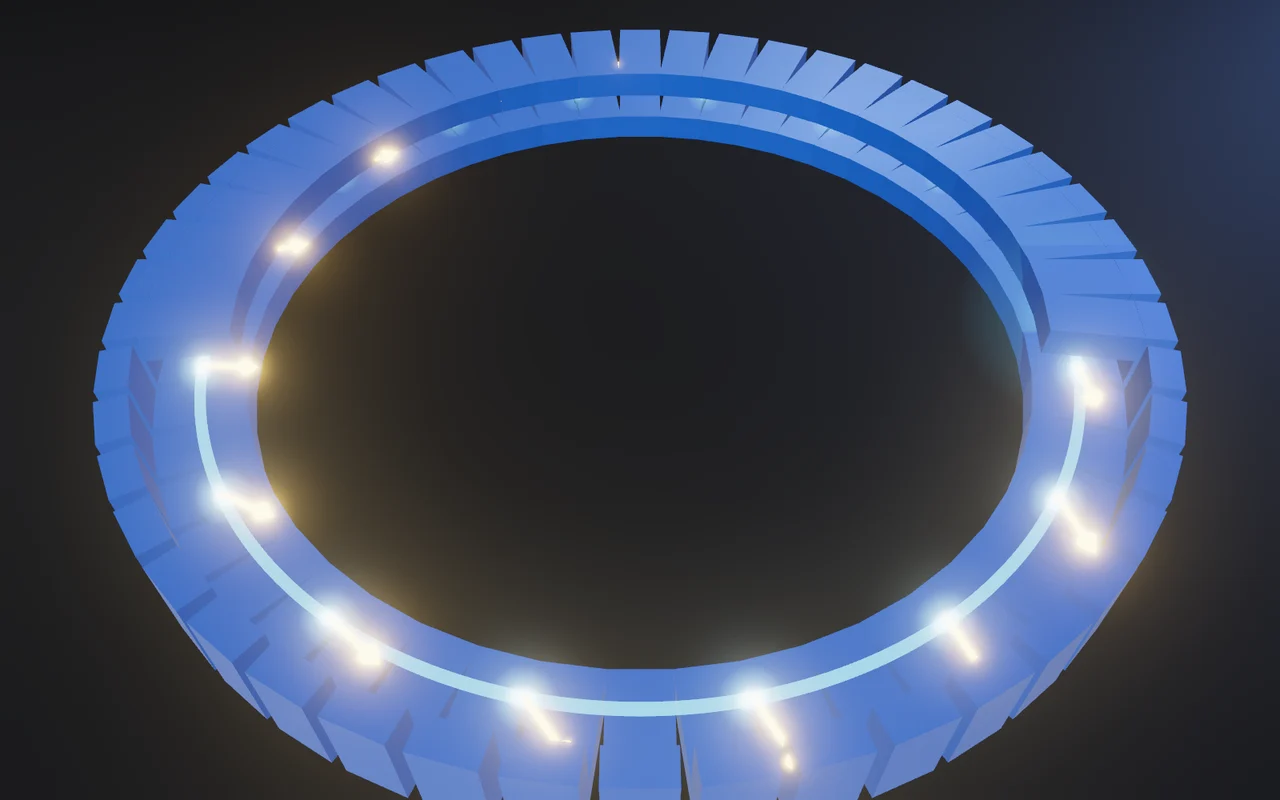
Image: Virtual Lab (3D illustration)
The muon is a cousin of the electron, about 200 times heavier. It has spin, so it behaves like a tiny magnet, and in a magnetic field its spin turns like the axis of a spinning top, a motion called precession. How fast it turns is set by a number called the g-factor.
Simple quantum theory says g should be exactly 2. But the vacuum is not truly empty: pairs of particles and antiparticles flicker in and out of existence and nudge the muon, making g slightly different from 2. That difference gives the experiment its name: g − 2.
At Fermilab, muons circled a 15-metre superconducting ring while scientists measured how fast their spins turned. Data were taken from 2018 to 2023. The final precision is 127 parts per billion, better than the 140 ppb goal, and it agrees perfectly with the 2021 and 2023 interim results.
For years a gap between experiment and theory was seen as a possible sign of new physics, but new theoretical calculations on supercomputers have largely closed it. The measurement now stands as a tough benchmark for any new theory that tries to extend the Standard Model.
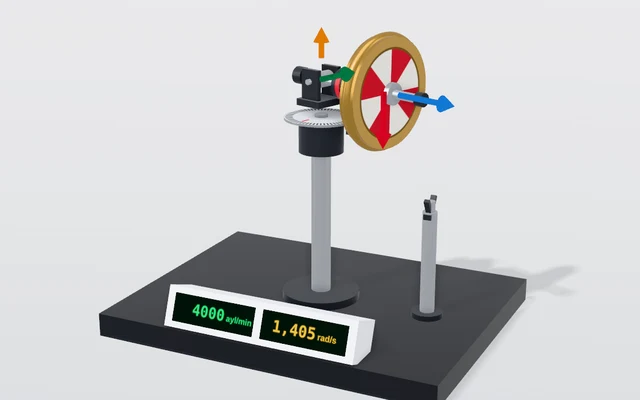 Try it in the labGyroscope3D lab on this site →Share on Telegram
Sources: Brookhaven / Fermilab · Universität Mainz