Strongest geomagnetic storm in 20 years paints auroras far to the south
The US National Oceanic and Atmospheric Administration (NOAA) recorded G5 conditions on 10 May 2024. The event was named the Gannon storm in memory of space physicist Jennifer Gannon.
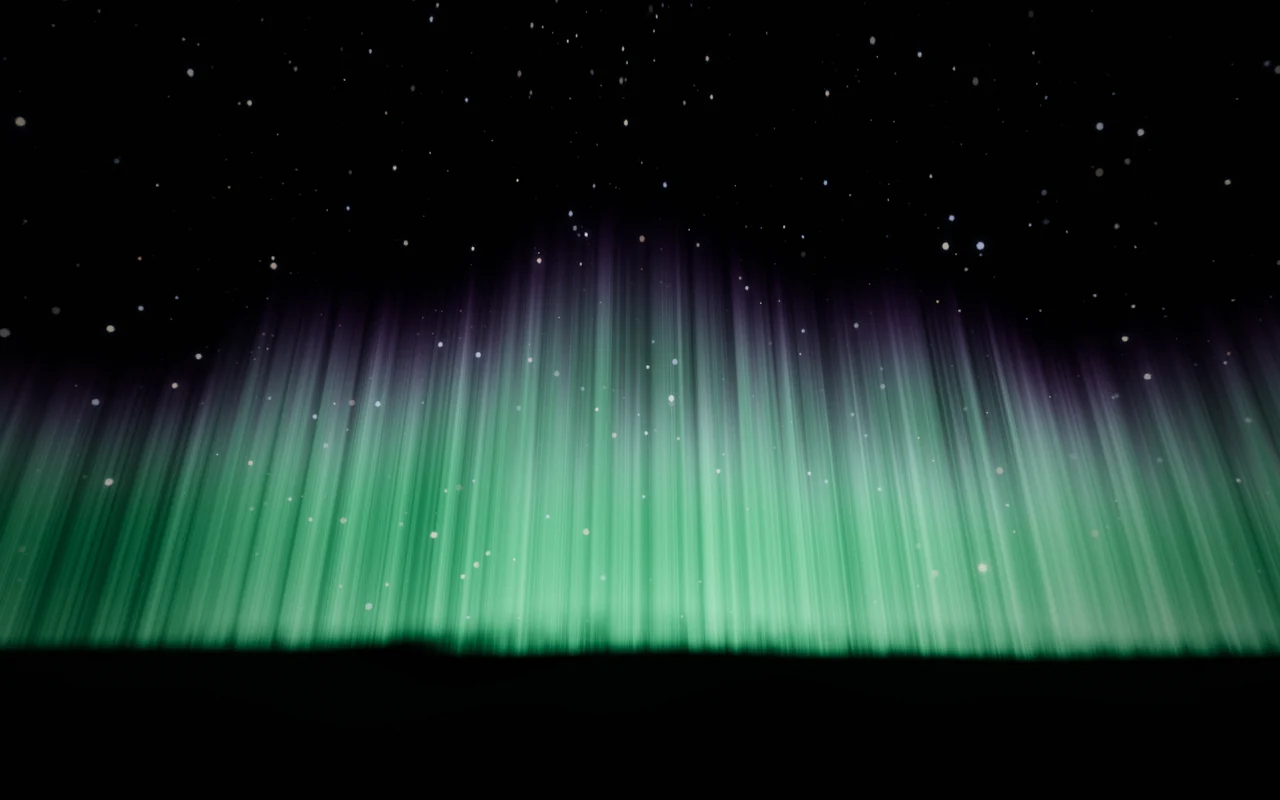
Image: Virtual Lab (3D illustration)
The Sun has an 11-year activity cycle, and in 2024 it was nearing its peak. On 8–9 May, active region AR3664 — 17 times wider than Earth — unleashed several powerful flares and sent at least five coronal mass ejections, clouds of magnetised plasma weighing billions of tonnes, towards Earth.
The clouds arrived on 10 May at 750–950 km/s and shook Earth's magnetic field violently. It was one of the most powerful storms since 1989.
Auroras appear when charged particles from the Sun 'excite' oxygen and nitrogen atoms in the atmosphere. The atoms release the extra energy as light — oxygen glows green and red, nitrogen blue and purple — just as in a gas-discharge tube.
Auroras are usually seen only near the poles. This time they were spotted in Alabama and Florida, in Mexico, southern Europe and northern India. Many people photographed them with nothing more than a phone camera.
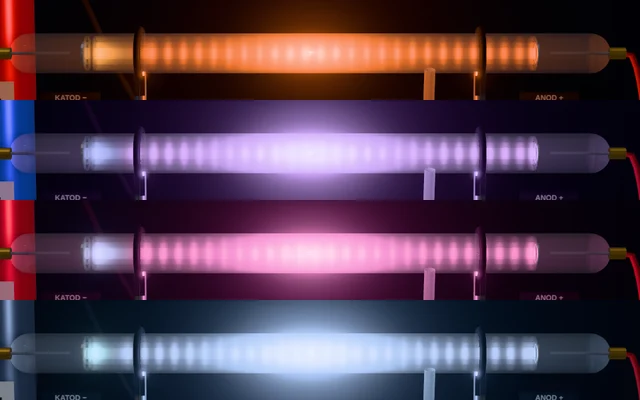 Try it in the labGas discharge3D lab on this site →Share on Telegram
Sources: NASA Earth Observatory · EurekAlert! / NASA