The most distant black hole seen in X-rays: UHZ1
The result was published in Nature Astronomy on 6 November 2023, in work led by Ákos Bogdán of the Center for Astrophysics | Harvard & Smithsonian.
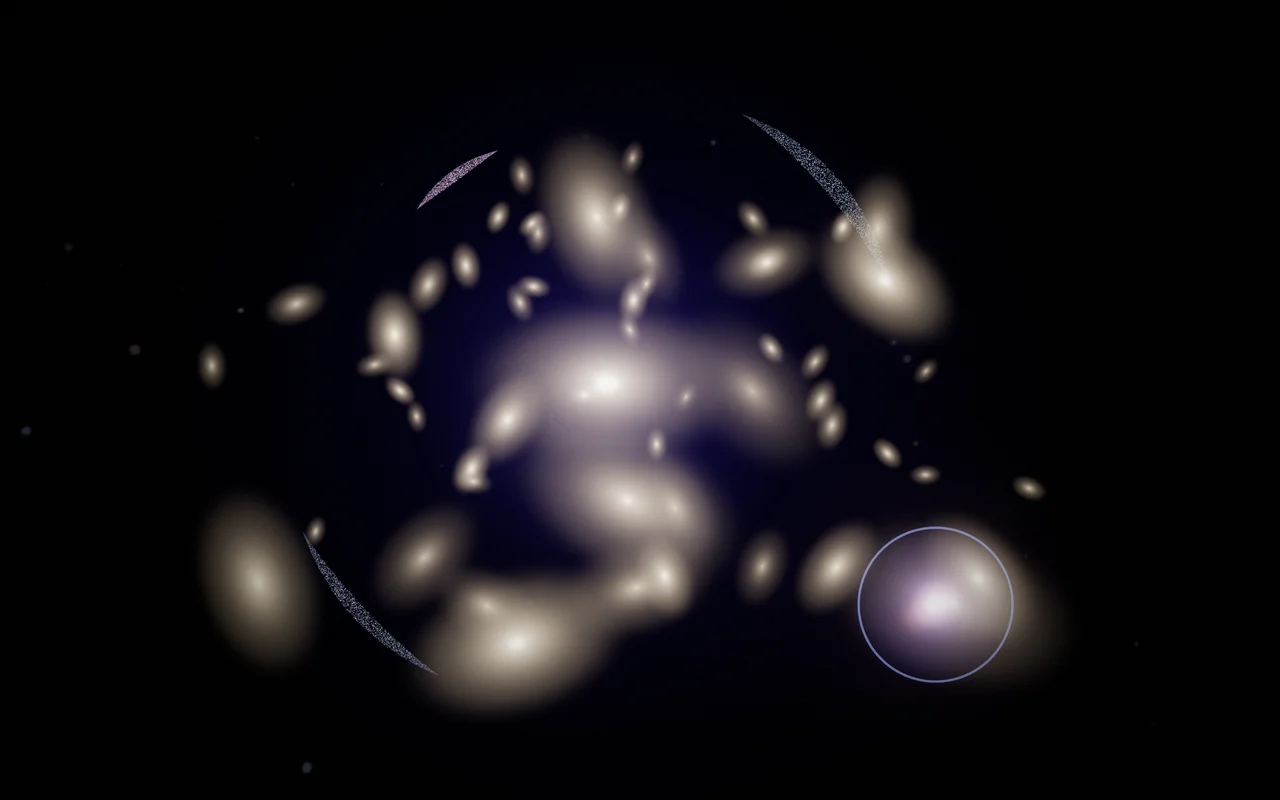
Image: Virtual Lab (3D illustration)
The galaxy UHZ1 lies 13.2 billion light years away; we see it when the universe was only 3% of its present age. To see something so distant and faint, astronomers used a natural magnifying glass: the gravity of the foreground galaxy cluster Abell 2744 bent and boosted its light about fourfold.
A gravitational lens works much like a glass one: a huge mass curves space and gathers light from a distant source. Webb measured UHZ1's distance, while more than two weeks of Chandra observations detected its X-rays, which come from extremely hot gas falling into a black hole.
From the X-rays' brightness and energy, the black hole's mass was estimated at 10–100 million Suns — comparable to all the stars in its galaxy, whereas in ordinary galaxies the black hole is only about 0.1% of the stellar mass.
A black hole born from a single collapsing star could not have grown so large so quickly, so the team concludes it formed from the direct collapse of a gas cloud of 10,000–100,000 solar masses. 'It's just really early on in the universe to be such a behemoth,' says Priyamvada Natarajan of Yale University.
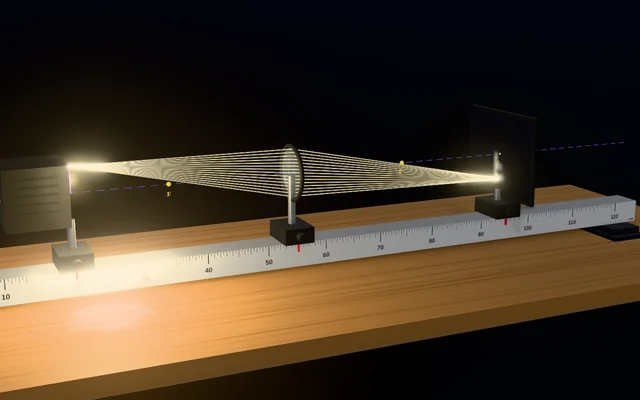 Try it in the labLenses and mirrors3D lab on this site →Share on Telegram