Chandrayaan-3 becomes the first to land near the Moon's south pole
The Vikram lander touched down on 23 August 2023; the Indian Space Research Organisation (ISRO) mission had launched on 14 July.
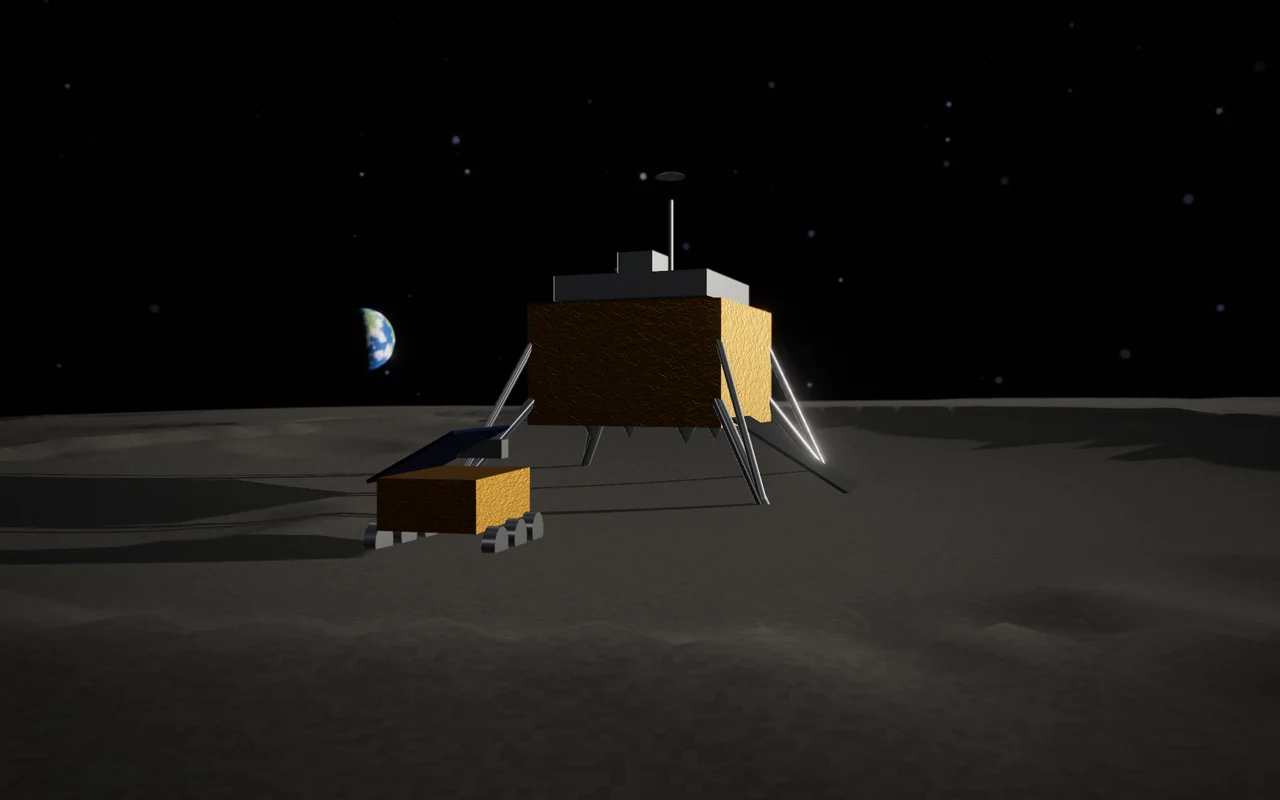
Image: Virtual Lab (3D illustration)
In 2019 Chandrayaan-2's lander crashed into the Moon because of software errors. Engineers learned the lessons: they strengthened the new lander's legs, widened the landing zone and added margins, so Vikram could land safely even if a sensor or engine misbehaved.
To save fuel, the spacecraft reached the Moon not directly but through ever-larger loops around Earth. It entered lunar orbit on 5 August and, after a 19-minute powered descent on 23 August, touched down at 69.37° south, its engines using thrust to bring its speed almost to zero.
The 26-kilogram Pragyan rover rolled down a ramp and drove about 100 metres. Its laser spectrometer found sulphur, aluminium, silicon, calcium and iron in the soil — sulphur could not have been confirmed so reliably from orbit. Ten days after landing, Vikram fired its engine, hopped about 40 centimetres and landed again.
When the lunar night fell, temperatures near the pole dropped to −190 °C. The lander and rover were not built for such cold and never woke up again, but the mission had done its job. The landing spot was named Shiv Shakti, and 23 August became India's National Space Day.
 Try it in the labJet engine3D lab on this site →Share on Telegram