The electron's shape measured with record precision: almost perfectly round
The result was the cover story of Science on 6 July 2023, by the groups of Eric Cornell and Jun Ye at JILA.
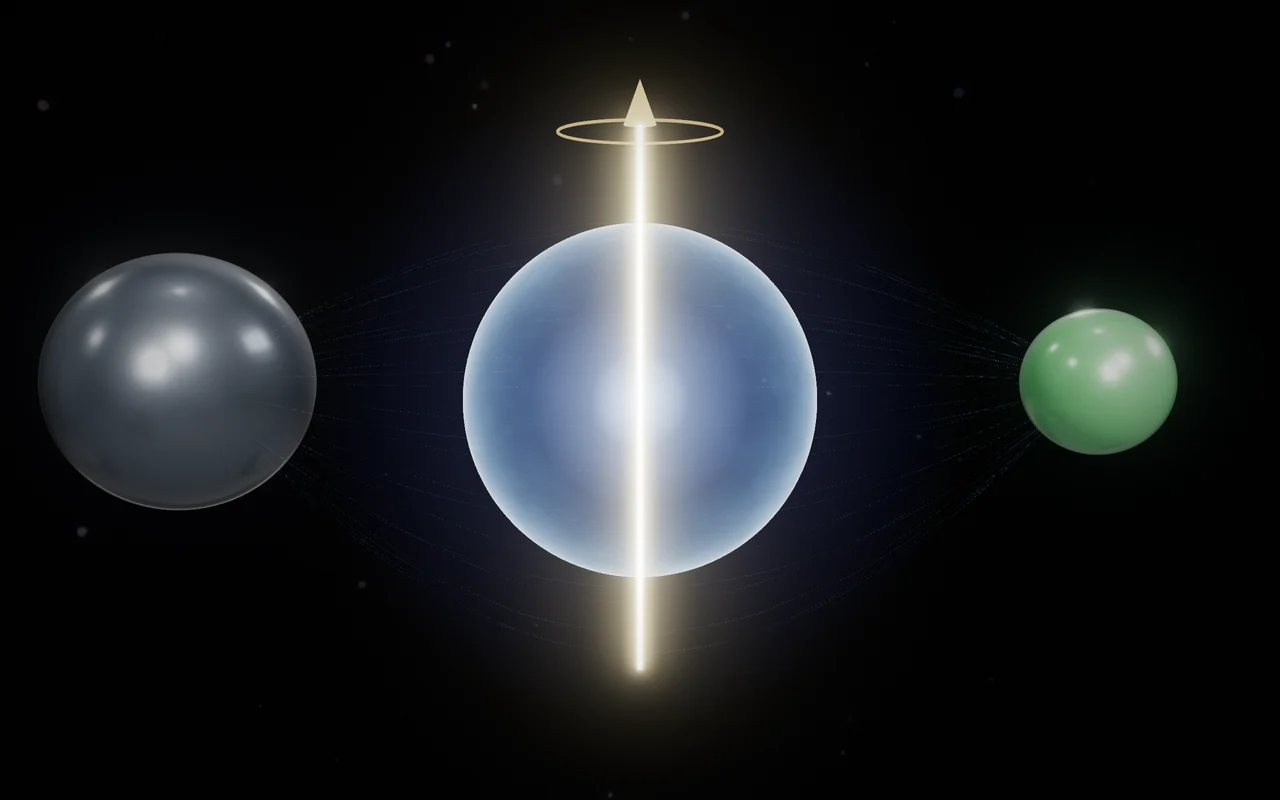
Image: Virtual Lab (3D illustration)
The Big Bang should have produced equal amounts of matter and antimatter, which would have annihilated, leaving only light. Yet matter surrounds us, so nature's laws must slightly favour matter — an asymmetry that may be linked to undiscovered particles.
Such particles would affect the vacuum around the electron and make its charge slightly 'egg-shaped', giving it a small electric dipole moment. The Standard Model predicts this moment to be vanishingly small, so detecting it would be a clear sign of new physics.
The JILA team studied electrons inside hafnium fluoride molecular ions, where an electron feels an enormous internal electric field. The ions were held in a special trap, and the electrons' spins precessed coherently for up to 3 seconds — a long time that boosted the precision.
Comparing the precession frequency with the electron aligned along and against the field, they found no difference: the dipole moment is below 4.1×10⁻³⁰ e·cm. That places tight limits on how heavy any new particles must be. 'Suddenly there is stuff in the universe, and the question is, why?' says Eric Cornell.
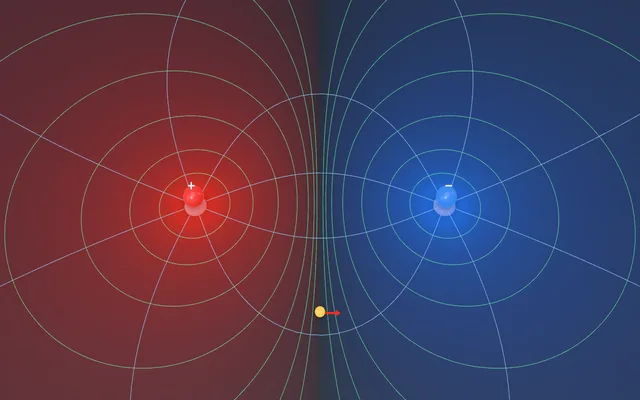 Try it in the labElectric field3D lab on this site →Share on Telegram
Sources: JILA · Physics World