JUICE sets off for Jupiter's icy moons
The spacecraft launched on 14 April 2023 from Kourou in French Guiana, on the last Ariane 5 flight to carry an ESA mission.
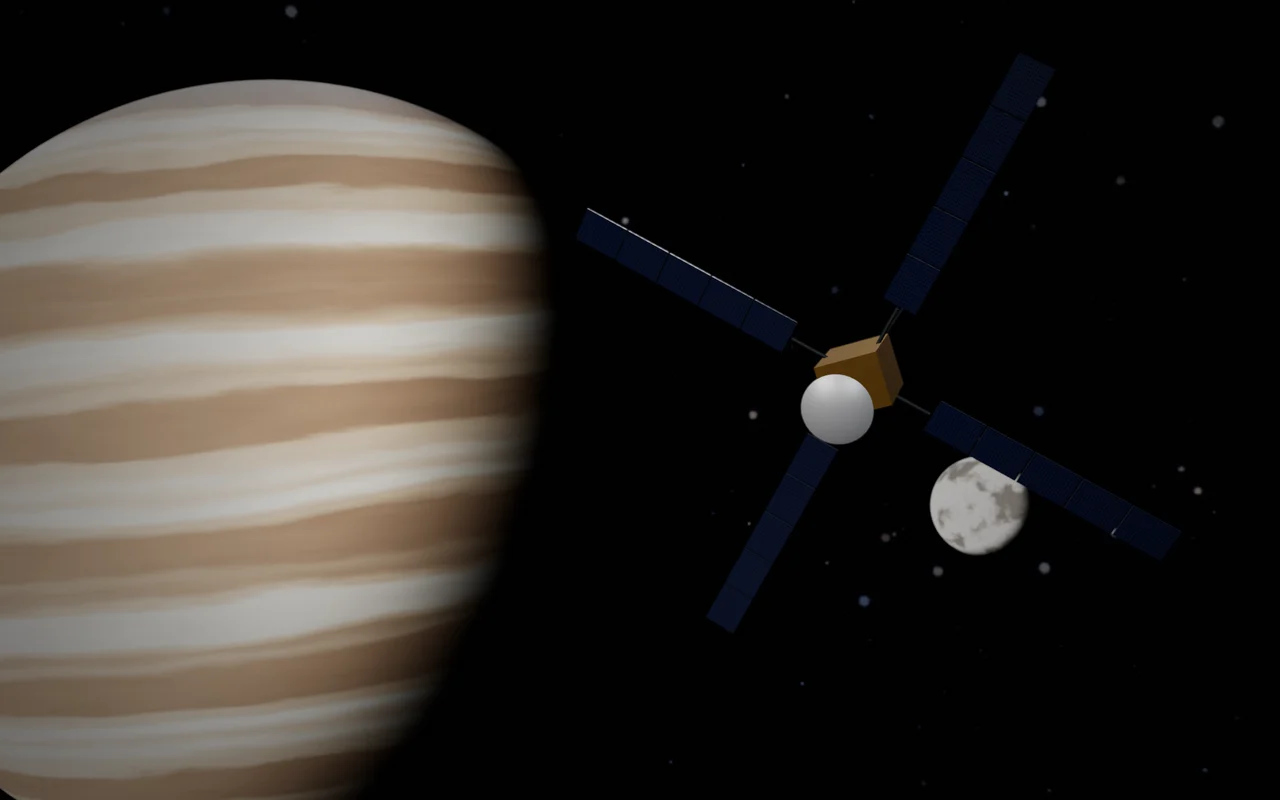
Image: Virtual Lab (3D illustration)
JUICE stands for JUpiter ICy moons Explorer. The spacecraft weighs more than 5 tonnes and carries 10 instruments, including cameras, spectrometers, an ice-penetrating radar and a magnetometer. Its solar arrays cover about 85 square metres, because sunlight at Jupiter is 25 times weaker than at Earth.
Even a powerful rocket cannot send a probe straight to Jupiter, so during its eight-year journey JUICE will swing past Earth and Venus, using their gravity as a slingshot to save fuel.
Ganymede is the largest moon in the solar system — bigger than Mercury — and is thought to hide a salty ocean beneath its thick ice shell. It is also the only moon with its own magnetic field. Callisto and Europa may have hidden oceans too.
JUICE will measure how deep and salty these oceans are and whether they could support life. In 2034 it will enter orbit around Ganymede, becoming the first spacecraft to orbit a moon other than our own.
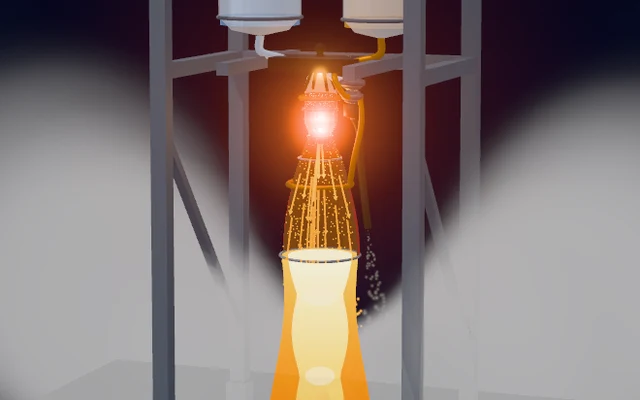 Try it in the labRocket engine3D lab on this site →Share on Telegram
Sources: ESA · The Planetary Society