First isolated black hole found drifting alone through the galaxy
Presented on 10 June 2022 at the American Astronomical Society meeting and published in The Astrophysical Journal, the work was led by Kailash Sahu.
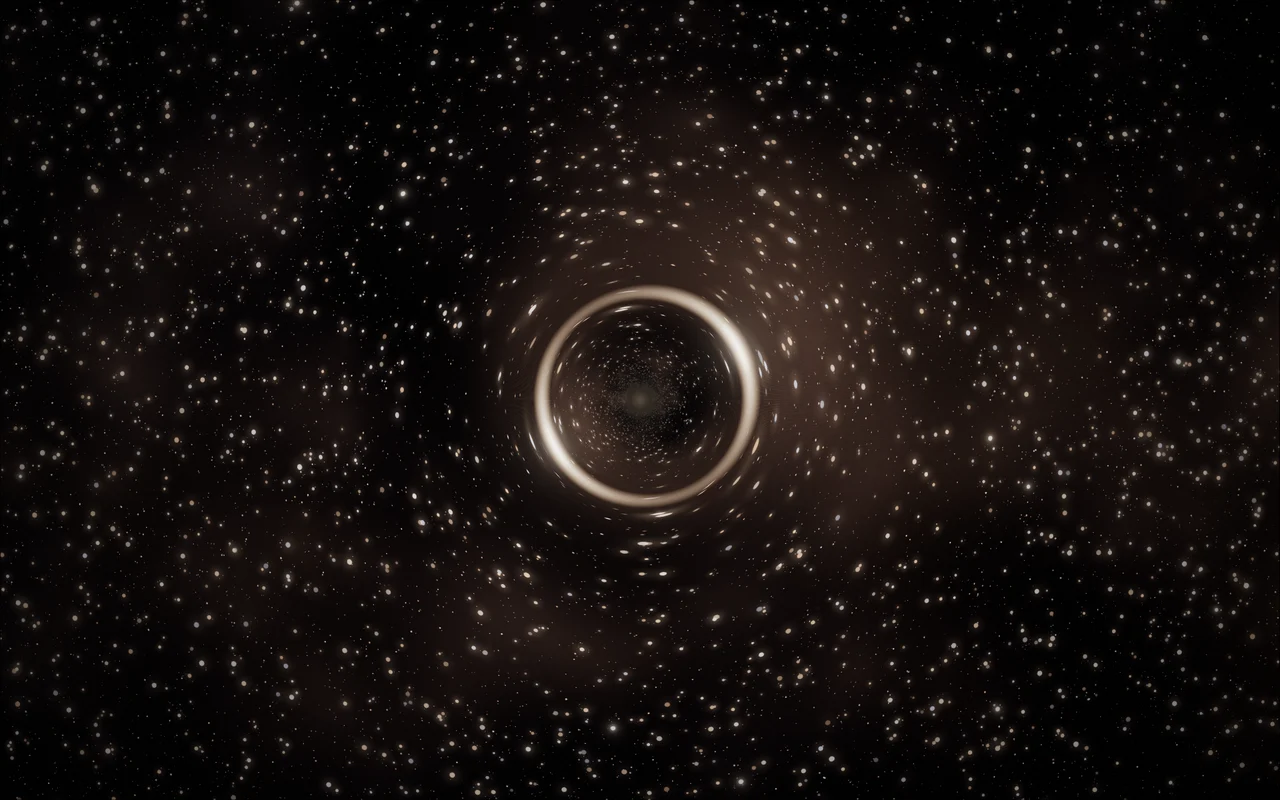
Image: Virtual Lab (3D illustration)
The Milky Way is thought to hold about 100 million stellar-mass black holes, left behind when massive stars explode. But every one found before was paired with a star, revealed by gas pulled off the companion or by its motion. A lone black hole is almost invisible.
Gravitational microlensing made the difference. When a black hole passes in front of a distant star, its gravity focuses the starlight like a magnifying glass and the star briefly brightens. In 2011 the OGLE and MOA surveys caught such an event lasting about 270 days — long enough to signal a very massive lens.
Hubble tracked the star's position for six years. Because its light was bent, the star shifted on the sky by a tiny amount — about a thousandth of an arcsecond. From that shift the lens's mass came out at about 7 times the Sun's, yet the lens emitted no light at all. It had to be a black hole.
The black hole is about 5,000 light years away, moving at 45 kilometres per second — perhaps from a 'kick' in the explosion that created it. Another team initially estimated a lower mass and suggested it might be a neutron star, but later analyses supported the black hole conclusion.
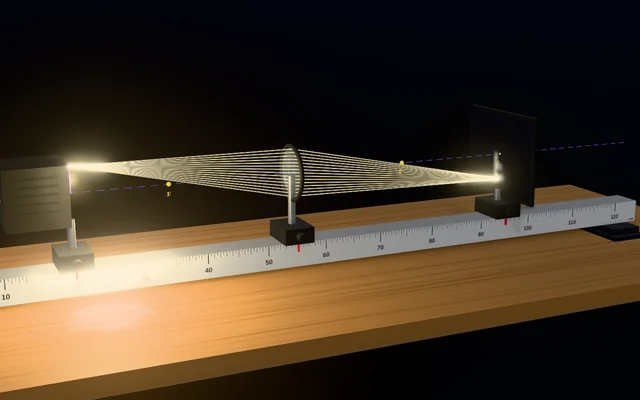 Try it in the labLenses and mirrors3D lab on this site →Share on Telegram
Sources: NASA Hubble · ApJ (DOI)