MicroBooNE finds no hint of a 'sterile neutrino'
The results were announced at a Fermilab seminar on 27 October 2021.
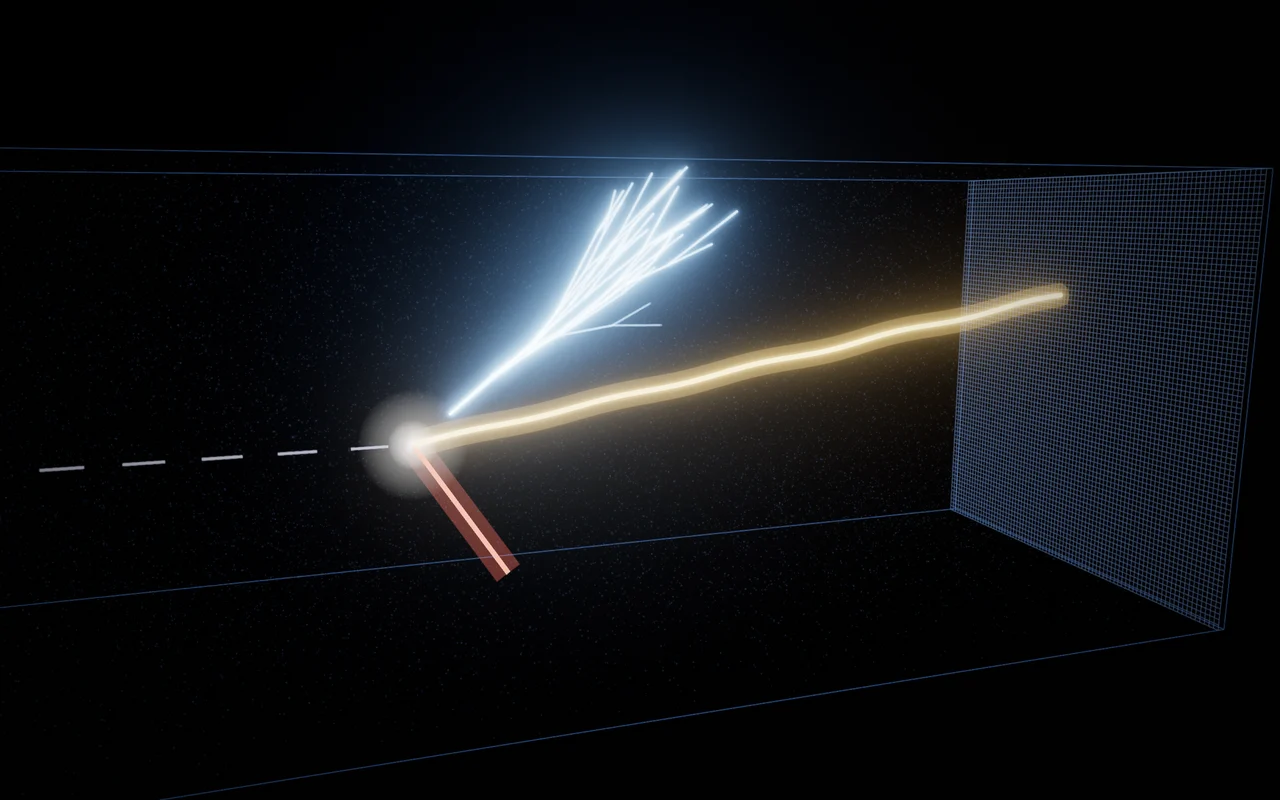
Image: Virtual Lab (3D illustration)
Three kinds of neutrino are known — electron, muon and tau — and they change into one another as they travel, an effect called neutrino oscillation. In the 1990s LSND, and later MiniBooNE, saw more electron neutrinos than expected; to explain this, some proposed a fourth, 'sterile' neutrino that barely interacts with matter.
MicroBooNE is a huge chamber filled with 170 tonnes of liquid argon. When a neutrino strikes an argon atom, charged particles are produced that knock electrons from other argon atoms, leaving a trail. An electric field draws these electrons to wires, and computers rebuild precise 3D pictures of the tracks — a modern, far more precise version of the cloud chamber.
Such pictures can tell electrons from photons, something MiniBooNE couldn't do. Four independent analyses showed MiniBooNE's excess did not come from electron neutrinos, contradicting the simplest sterile-neutrino model.
The real cause of the MiniBooNE signal is still unknown — perhaps some other process, or more complex new physics. Searches continue at Fermilab with additional detectors.
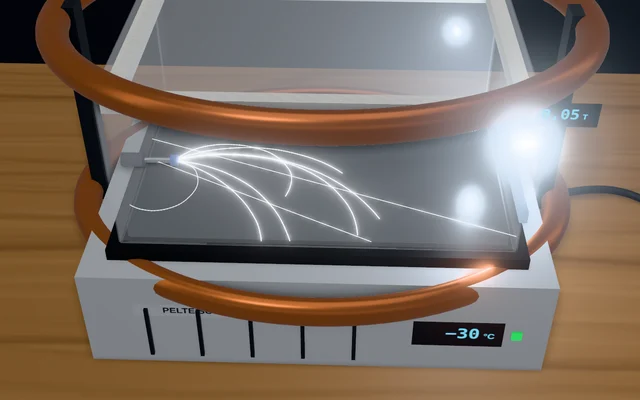 Try it in the labCloud chamber3D lab on this site →Share on Telegram