The Lucy probe sets off for Jupiter's Trojan asteroids
The probe launched on 16 October 2021 on an Atlas V rocket from Cape Canaveral, Florida.
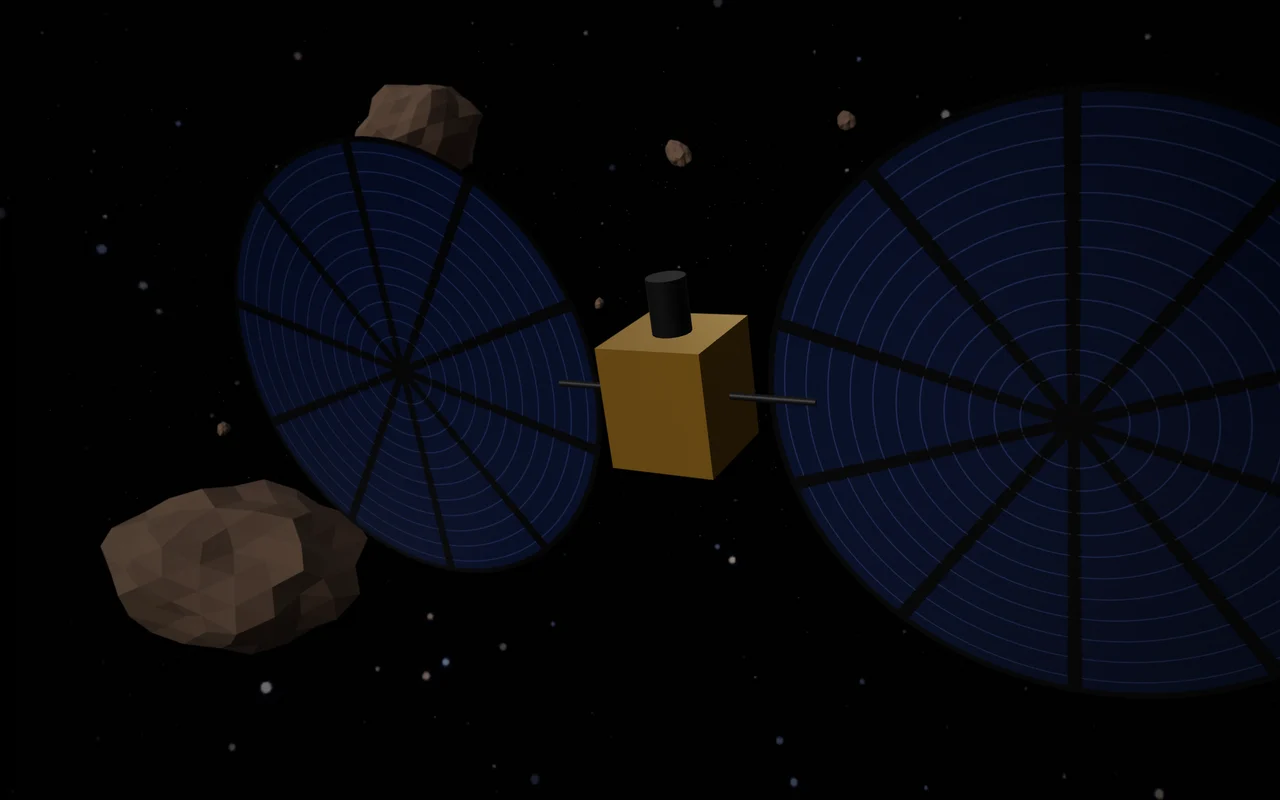
Image: Virtual Lab (3D illustration)
The Trojan asteroids travel in two swarms along Jupiter's orbit, 60 degrees ahead and behind the planet, where the pulls of the Sun and Jupiter balance. Trapped there for billions of years, they preserve almost unchanged material from the solar system's birth.
Lucy has two huge circular solar panels, each more than 7 metres across, because sunlight at Jupiter's distance is 25 times weaker than at Earth. The probe swings past Earth several times to gain speed from its gravity.
In 2023 Lucy flew past the small main-belt asteroid Dinkinesh and discovered it has a moon; in 2025 it studied the asteroid Donaldjohanson. From 2027 it will reach the Trojans, exploring several of them through 2033.
The mission is named after 'Lucy', the famous 3.2-million-year-old hominin skeleton found in Ethiopia in 1974 that shed light on human origins. The Trojans are expected to shed light on the origins of our planets.
 Try it in the labSolar power station3D lab on this site →Share on Telegram