Black holes merging with neutron stars detected for the first time
The result was published in The Astrophysical Journal Letters on 29 June 2021; the signals arrived on 5 and 15 January 2020.
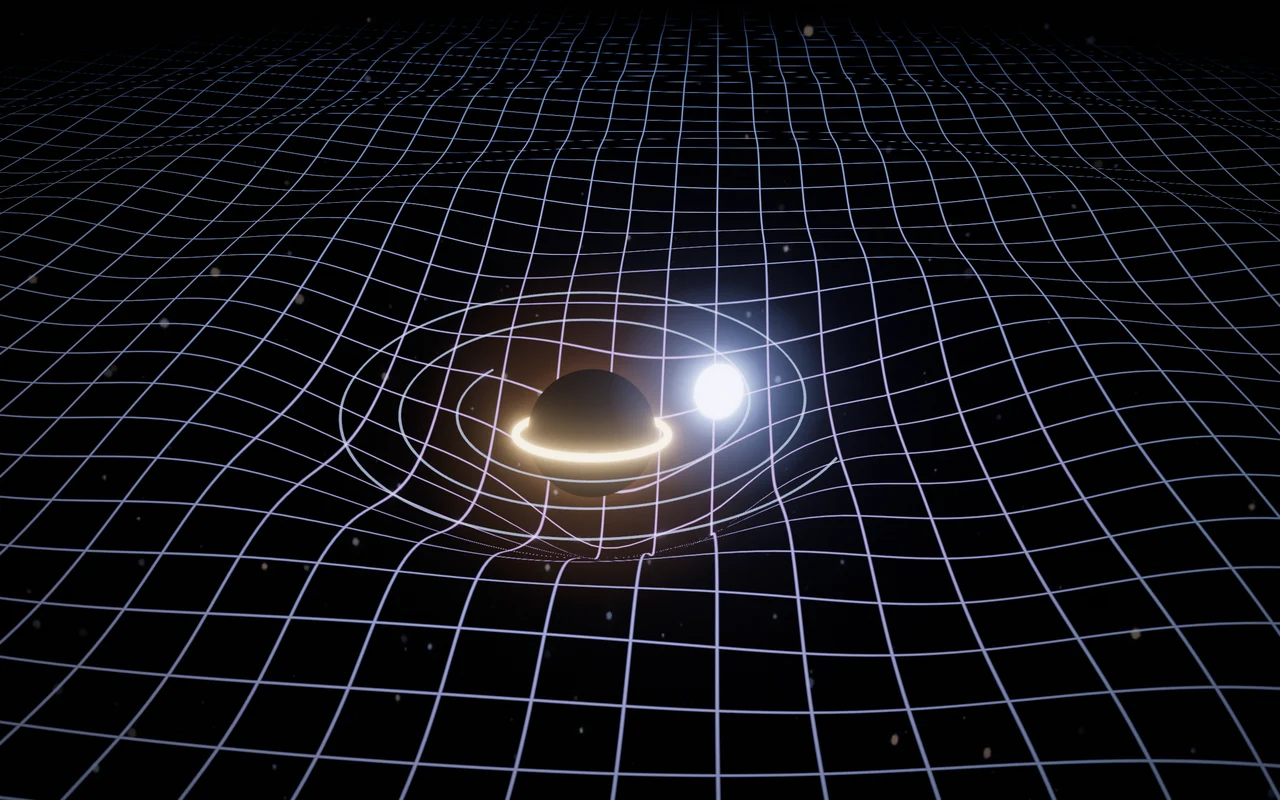
Image: Virtual Lab (3D illustration)
Gravitational waves are ripples in spacetime made by massive objects in rapid motion, first detected in 2015. Since then dozens of mergers of black-hole pairs and neutron-star pairs had been seen — but never a clear 'mixed' pair of a black hole and a neutron star.
LIGO is a giant L-shaped Michelson interferometer with 4-kilometre arms. A passing wave stretches one arm slightly and squeezes the other — by thousands of times less than a proton's width — and interfering laser beams detect the change.
The first event, GW200105, merged a 9-solar-mass black hole with a 1.9-solar-mass neutron star; the second, GW200115, a 6-solar-mass black hole with a 1.5-solar-mass neutron star. Both happened roughly 900 million to 1 billion light years away.
Telescopes saw no light from either. Scientists think the black holes swallowed the neutron stars whole, without tearing them apart, so no matter was flung out.
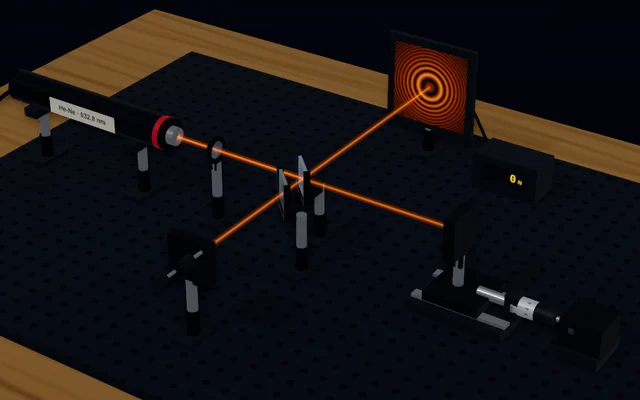 Try it in the labMichelson interferometer3D lab on this site →Share on Telegram
Sources: LIGO Caltech · ApJ Letters (DOI)