Home › Nobel Prize laureates › 2023
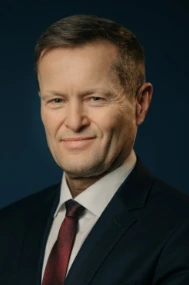
Ferenc Krausz
born 1962 · Hungary / Austria
Prize motivation“for experimental methods that generate attosecond pulses of light for the study of electron dynamics in matter”
Shared the prize with: Pierre Agostini, Anne L'Huillier
The discovery
Electrons inside atoms and molecules move extremely fast, changing over attoseconds — billionths of a billionth of a second. Capturing such fast motion needs an even shorter flash, just as a sharp photo of a galloping horse needs a very brief exposure.
In 1987 Anne L'Huillier discovered that an infrared laser beam passing through a noble gas produces many “overtones” — light of much higher frequency. Added together (interfering), these could form very short flashes.
In 2001 Pierre Agostini produced and measured a train of flashes each lasting just 250 attoseconds, and that same year Ferenc Krausz isolated a single 650-attosecond pulse, opening a new “door” into the world of electrons.
Life
Born in 1962 in Mór, Hungary, he studied at the Budapest University of Technology and earned his doctorate at the Vienna University of Technology in 1991.
Since 2003 he has directed the Max Planck Institute of Quantum Optics in Garching, Germany, and is a professor at the University of Munich. He is developing a way to detect disease early from the laser “fingerprint” of molecules in blood.
Where it is used today
Attosecond pulses let scientists watch electrons moving in atoms and molecules, helping explain how chemical reactions begin.
In future they may help build faster electronics and detect diseases early from molecular “fingerprints” in blood.
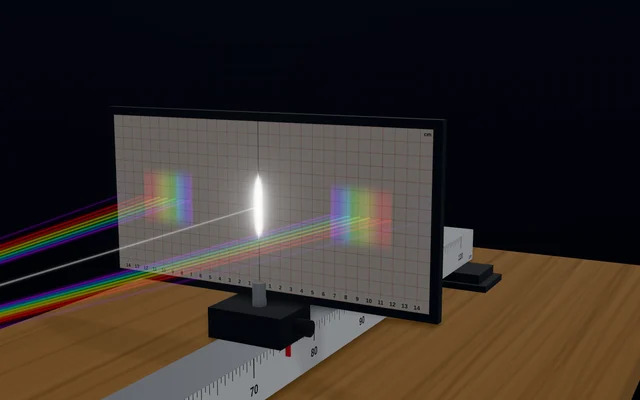 Try it in the labInterference3D lab on this site →Share on Telegram
Sources: NobelPrize.org — 2023