Home › Nobel Prize laureates › 2019

Didier Queloz
born 1966 · Switzerland
Prize motivation“for the discovery of an exoplanet orbiting a solar-type star”
Shared the prize with: James Peebles, Michel Mayor
The discovery
A planet tugs on its star, so the star also “wobbles” in a small circle. As it moves towards us its light shifts slightly to blue, and away from us to red — the Doppler effect. Measuring this shift can reveal an invisible planet.
In 1995 Michel Mayor and his doctoral student Didier Queloz observed the star 51 Pegasi at the Haute-Provence Observatory in France with a highly precise instrument they had built, and found it wobbling every 4 days.
This meant a Jupiter-like gas giant was orbiting it — so close that its year lasts just 4 days. No one had expected such “hot Jupiters”, and the discovery changed ideas about how planets form.
Life
Born in 1966 in Switzerland, he studied physics at the University of Geneva and earned his doctorate there in 1995 under Michel Mayor.
He is now a professor at the University of Cambridge, UK, and ETH Zurich, leading programmes to search for Earth-like planets and study the origins of life.
Where it is used today
More than 6,000 exoplanets have now been found, many by this method or by the dimming of a star as a planet passes in front of it.
The next task is to find Earth-like planets and search their atmospheres for signs of life.
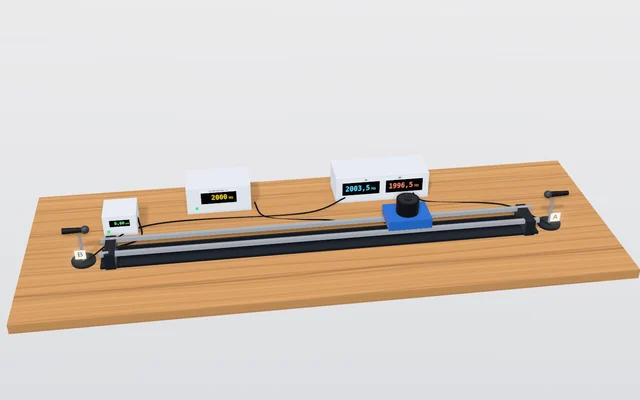 Try it in the labThe Doppler effect3D lab on this site →Share on Telegram
Sources: NobelPrize.org — 2019