Home › Nobel Prize laureates › 1996–2005 › 2001
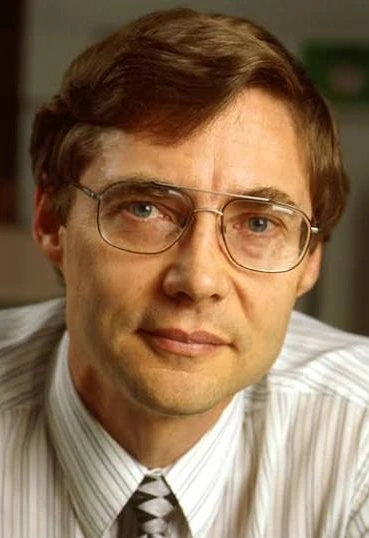
Carl E. Wieman
born 1951 · USA
Prize motivation“for the achievement of Bose-Einstein condensation in dilute gases of alkali atoms, and for early fundamental studies of the properties of the condensates”
Shared the prize with: Eric A. Cornell, Wolfgang Ketterle
The discovery
In 1924–25 the Indian physicist Satyendra Nath Bose and Albert Einstein predicted that if certain atoms were cooled enough, they would all “sink” into the same lowest energy state, so that billions of atoms behave like one giant atom. This is called a Bose–Einstein condensate.
Making one took 70 years. In June 1995 at JILA in Boulder, Eric Cornell and Carl Wieman combined laser cooling with a magnetic trap to cool about 2,000 rubidium atoms to 170 nanokelvin and create the first condensate.
A few months later Wolfgang Ketterle at MIT made a much larger condensate of sodium atoms and showed that two condensates meeting produce an interference pattern, proving that their atoms really move as a single wave.
Life
Born on 26 March 1951 in Corvallis, Oregon, USA, he graduated from MIT and earned his doctorate at Stanford in 1977 under Theodor Hänsch.
He worked at the University of Michigan and from 1984 at the University of Colorado, and later researched physics education at the University of British Columbia in Canada and at Stanford.
Where it is used today
Condensates let us see the quantum world on a “large” scale, and are used to study superfluidity, quantum vortices and superconductor-like effects under controlled conditions.
They underpin atom interferometers and “atom lasers”, instruments that measure gravity and rotation with extreme precision. In 2018 a condensate was even made aboard the International Space Station.
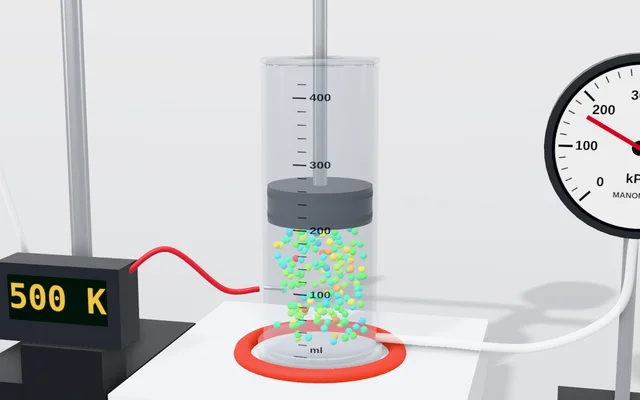 Try it in the labGas laws3D lab on this site →Share on Telegram
Sources: NobelPrize.org — 2001