Home › Nobel Prize laureates › 1996–2005 › 2000
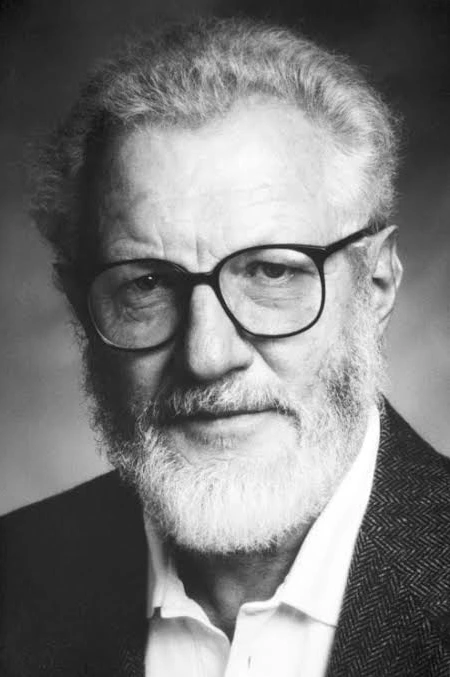
Herbert Kroemer
1928–2024 · Germany / USA
Prize motivation“for developing semiconductor heterostructures used in high-speed- and opto-electronics”
Shared the prize with: Zhores I. Alferov, Jack S. Kilby
The discovery
A heterostructure is a stack of thin layers of different semiconductors, for example gallium arsenide and aluminium gallium arsenide. At the boundaries between the layers, electrons and “holes” gather exactly where they are needed.
In 1957 Herbert Kroemer showed theoretically that such boundaries make transistors much faster, and in 1963 that they could be used to build an efficient laser. Zhores Alferov independently proposed the same laser that year.
In 1970 Alferov's group at the Ioffe Institute in Leningrad built the first heterostructure semiconductor laser to work continuously at room temperature. Earlier semiconductor lasers had worked only when deeply cooled.
Life
Born on 25 August 1928 in Weimar, Germany, he earned his doctorate at the University of Göttingen in 1952.
He worked for companies in Germany and the USA, including the RCA and Varian laboratories, and from 1976 was a professor at the University of California, Santa Barbara. He died on 8 March 2024.
Where it is used today
Heterostructure lasers drive fibre-optic communication, the backbone of the internet, and are found in CD, DVD and Blu-ray players, barcode scanners and laser pointers.
High-frequency transistors in mobile phones and satellite links, bright LEDs and the efficient solar cells on spacecraft are also built on heterostructures.
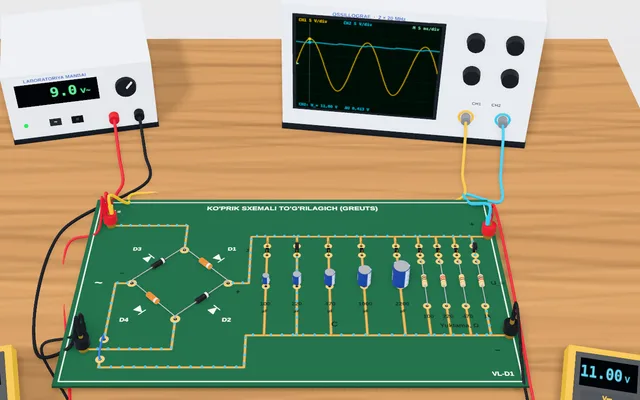 Try it in the labDiode3D lab on this site →Share on Telegram
Sources: NobelPrize.org — 2000