Europa Clipper sets off for Jupiter's icy moon
The spacecraft launched on 14 October 2024 from NASA's Kennedy Space Center in Florida.
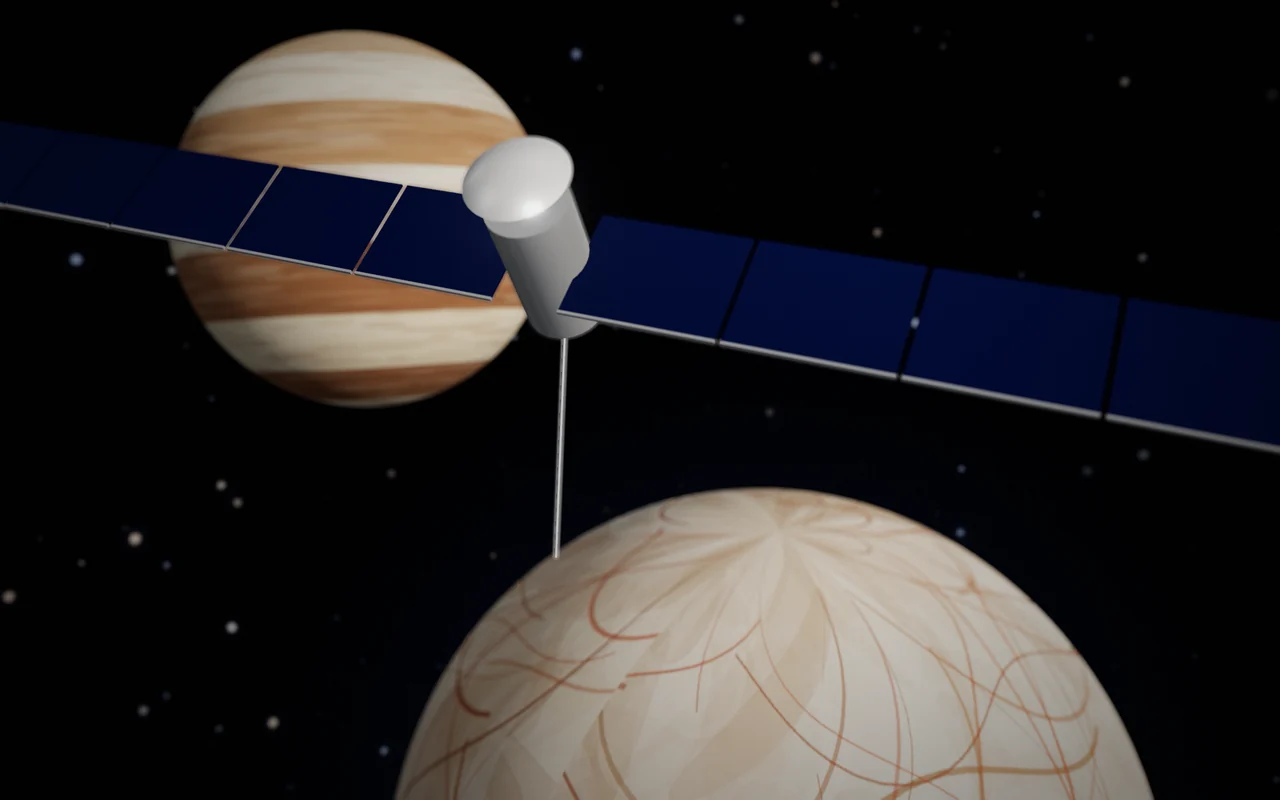
Image: Virtual Lab (3D illustration)
Europa is Jupiter's fourth-largest moon. Its surface is covered by a thick shell of ice, beneath which a salty ocean is thought to wrap around the entire moon — possibly holding more water than all of Earth's oceans.
The ocean stays liquid thanks to Jupiter's powerful gravity: as Europa orbits, its interior is constantly squeezed and stretched, generating heat. Water, energy and chemistry are the three ingredients life needs.
Europa Clipper won't search for life directly; it will find out whether Europa could support it. Nine instruments will measure the thickness of the ice, the saltiness of the ocean and the make-up of the surface. On its closest pass it will skim just 25 km above the surface.
With its solar arrays deployed, the spacecraft spans more than 30 metres — longer than a basketball court. Sunlight at Jupiter is about 25 times weaker than at Earth, so the panels must be that large. On the way, it will gain speed from the gravity of Mars and Earth.
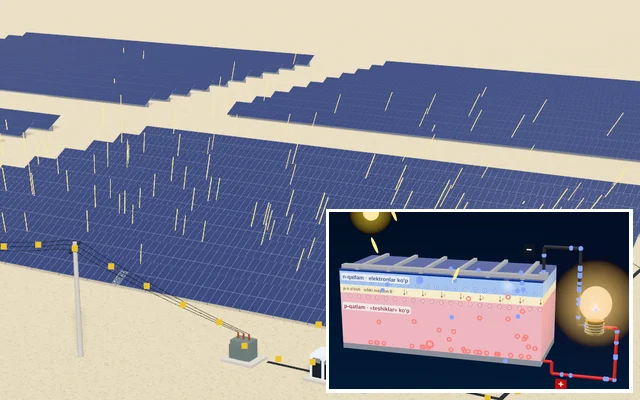 Try it in the labSolar power station3D lab on this site →Share on Telegram
Sources: NASA JPL / ScienceDaily · Johns Hopkins APL