Chang'e-6 brings back the first samples from the Moon's far side
The return capsule landed in Inner Mongolia on 25 June 2024; the China National Space Administration announced the sample mass on 28 June.
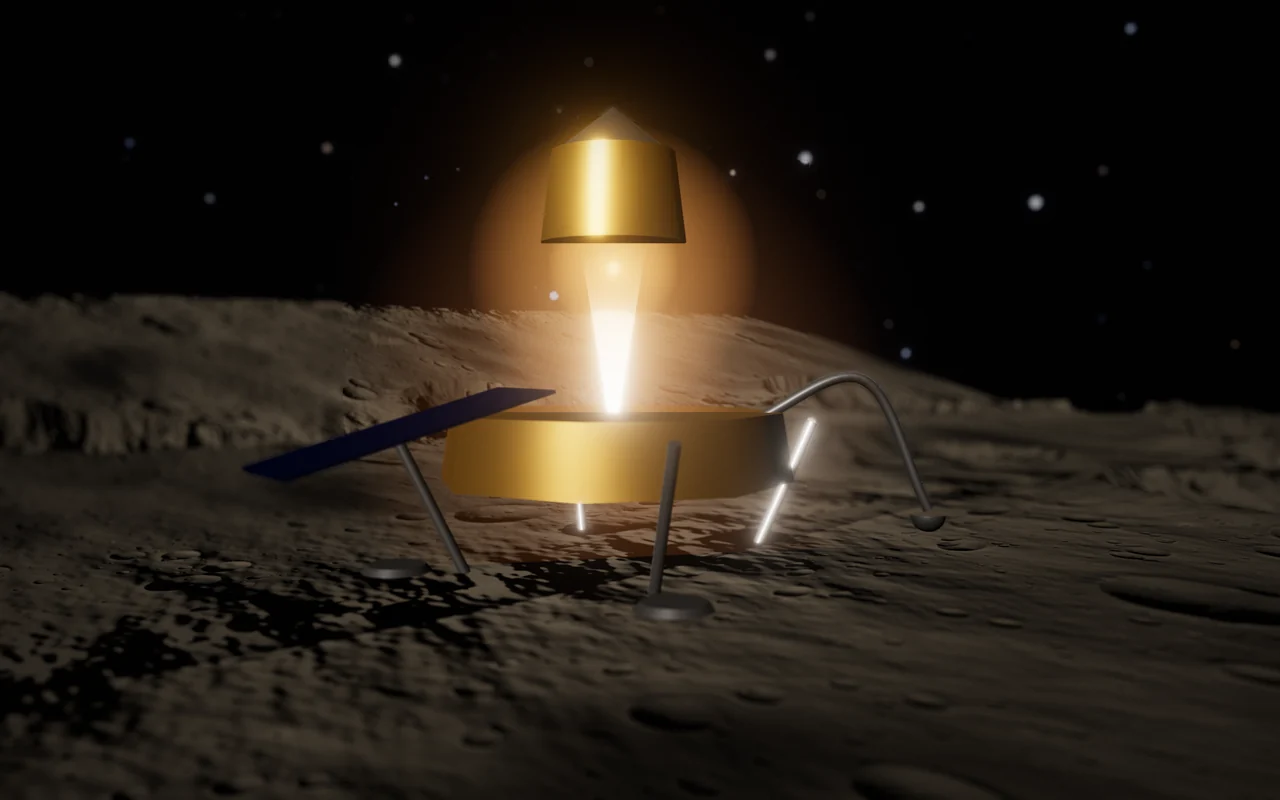
Image: Virtual Lab (3D illustration)
The Moon always shows Earth the same face, so its far side can never be seen from here. It is very different from the near side: fewer dark 'seas', a thicker crust and many more craters.
Working there is hard because there is no direct line of communication with Earth. China launched a dedicated relay satellite, Queqiao-2, into lunar orbit in March 2024 to solve this.
Chang'e-6 launched on 3 May and on 2 June landed in Apollo crater within the South Pole–Aitken basin, one of the largest impact craters in the solar system. A robotic arm and drill collected samples from the surface and below.
An ascent module lifted the samples to lunar orbit, where they were transferred to the return craft, and the capsule landed on 25 June. Later analysis showed that far-side basalts formed from volcanic lava about 2.8 billion years ago.
 Try it in the labRocket engine3D lab on this site →Share on Telegram
Sources: The Planetary Society · Chinese Academy of Sciences