Hayabusa2 brings home samples from asteroid Ryugu
The capsule landed on 6 December 2020 at Woomera in South Australia. The probe had launched on 3 December 2014.
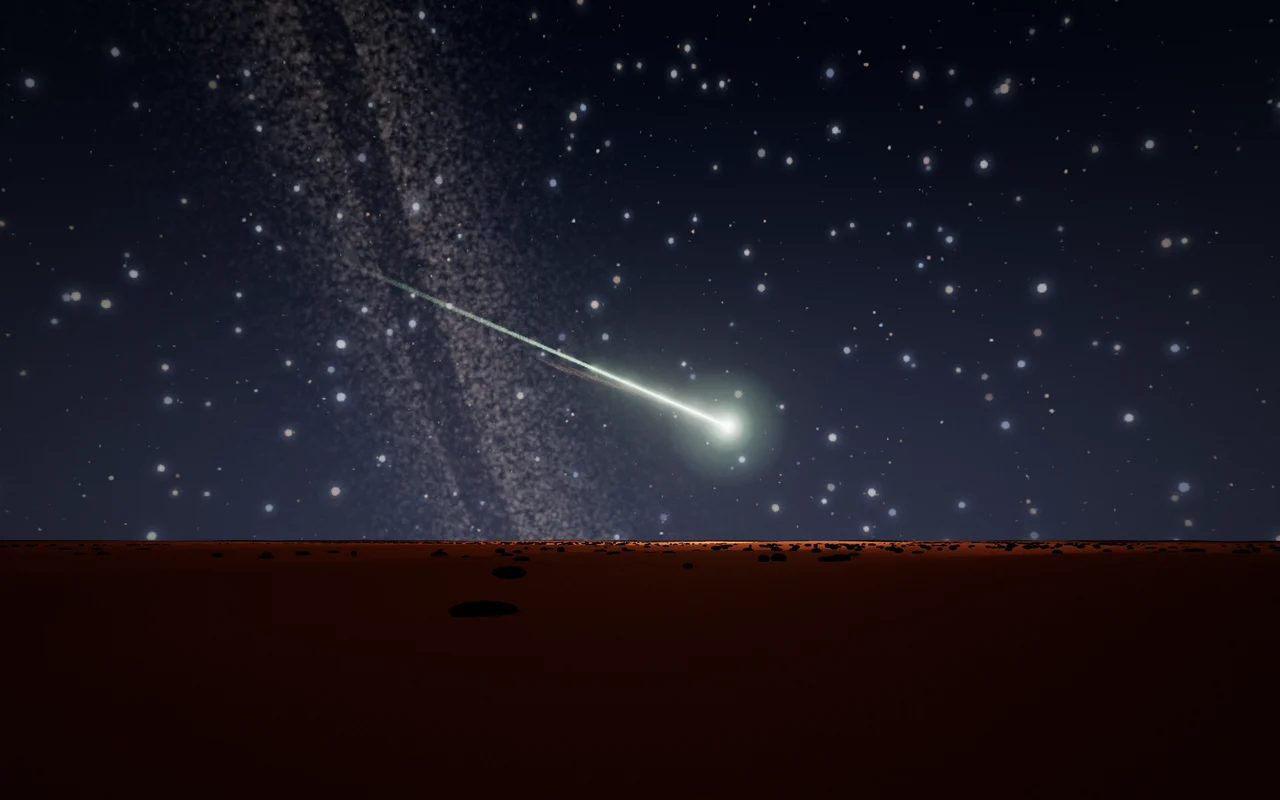
Image: Virtual Lab (3D illustration)
Ryugu is a dark, carbon-rich asteroid about 900 m across. Hayabusa2 arrived in 2018 and in 2019 made two brief touchdowns to collect samples — the second beside a crater the probe had made itself.
To make it, the probe fired a 2-kg copper 'bullet' into the asteroid at 2 km/s, blasting an artificial crater that exposed deeper material untouched by sunlight and cosmic radiation. It was the first attempt to sample an asteroid's subsurface.
On 5 December 2020, 220,000 km from Earth, the probe released a 40-cm capsule. It hit the atmosphere at about 12 km/s, streaking across the sky as a bright fireball; a heat shield protected it before a parachute opened and lowered it gently to the ground.
A search team located it by its radio beacon and flew it out by helicopter. Ryugu samples later revealed more than 20 amino acids and then uracil, one of the building blocks of RNA. The probe itself did not return: it is flying on to another small asteroid.
 Try it in the labFree fall3D lab on this site →Share on Telegram
Sources: JAXA · JST Science Japan