A fast radio burst is caught in our own galaxy for the first time
The event was named FRB 200428; three papers describing it appeared in Nature on 4 November 2020.
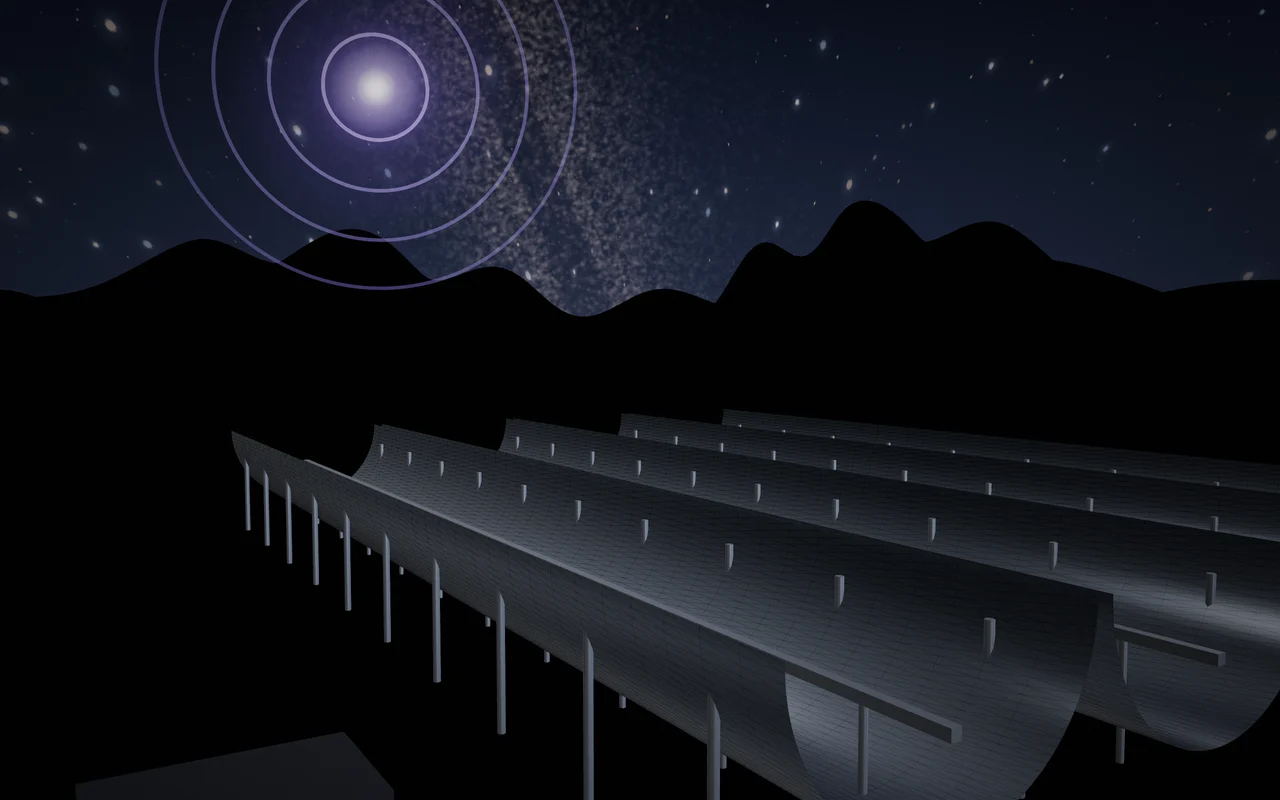
Image: Virtual Lab (3D illustration)
Fast radio bursts were discovered in 2007. They last milliseconds yet release as much energy as the Sun does in days. Coming from billions of light years away, their source was very hard to pin down.
In late April 2020 the magnetar SGR 1935+2154, about 30,000 light years away, became active. A magnetar is a neutron star with the strongest known magnetic field. It began flaring repeatedly in X-rays, drawing many telescopes.
On 28 April Canada's CHIME radio telescope and the small STARE2 antennas in the US simultaneously recorded a powerful double-peaked radio burst from the magnetar's direction, just as space telescopes saw an X-ray flare from it.
The burst was thousands of times stronger than any radio pulse seen from our galaxy, and only about 30 times weaker than the faintest bursts from other galaxies — so active magnetars in distant galaxies could make such bursts too.
 Try it in the labLC circuit3D lab on this site →Share on Telegram
Sources: Nature (DOI) · Physics World