Comet Borisov: a first look at the make-up of another star system
Two papers were published on 20 April 2020 in Nature Astronomy. The comet was found in August 2019 by Crimean amateur astronomer Gennady Borisov.
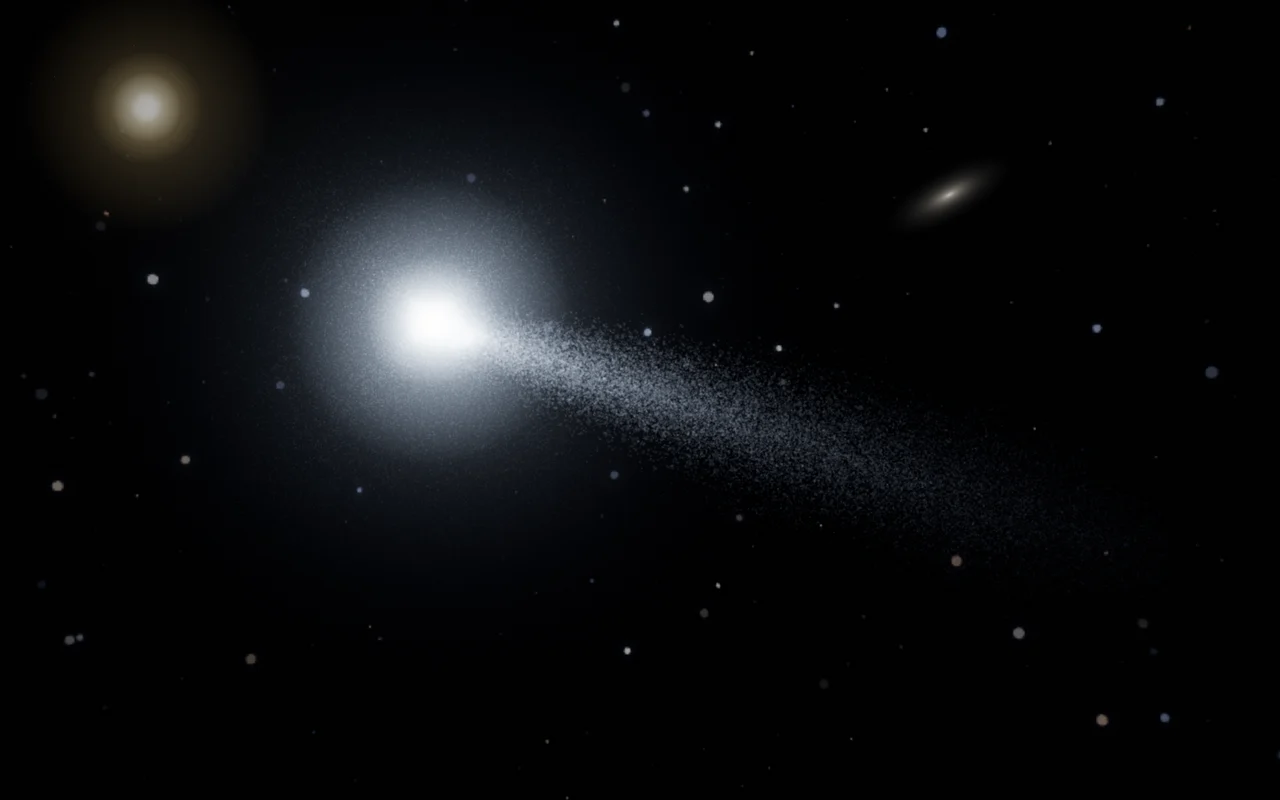
Image: Virtual Lab (3D illustration)
2I/Borisov is the second known object to arrive from outside the solar system and the first true interstellar comet. It does not orbit the Sun but passes through at about 33 km/s, leaving only a few months to study it.
As a comet nears the Sun, its ices evaporate into a cloud of gas. Each substance emits or absorbs light only at its own wavelengths, and telescopes use these 'fingerprints' to read the gas's make-up from afar.
The ALMA radio telescope in Chile found 9 to 26 times more carbon monoxide than in a typical solar system comet. Hubble, observing in ultraviolet, saw more carbon monoxide than water vapour — while our comets are usually far richer in water.
Carbon monoxide freezes only at very low temperatures, about −250 °C, so the comet must have formed far from its star or around a very cold one. Scientists suspect it was flung out of a red dwarf's planetary system.
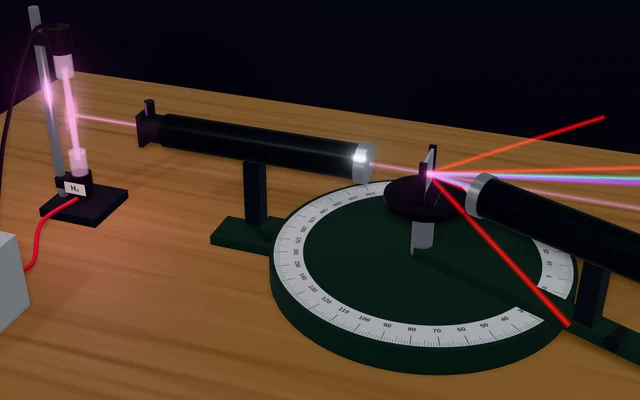 Try it in the labAtomic spectra3D lab on this site →Share on Telegram
Sources: Nature Astronomy (DOI) · NRAO / ALMA