Home › Nobel Prize laureates › 2016
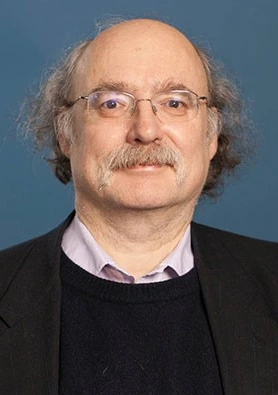
F. Duncan M. Haldane
born 1951 · UK / USA
Prize motivation“for theoretical discoveries of topological phase transitions and topological phases of matter”
Shared the prize with: David J. Thouless, J. Michael Kosterlitz
The discovery
Topology studies properties that do not change when a shape is stretched or bent. A bun with no hole, a bagel with one and a pretzel with two are topologically different: the number of holes can only be a whole number — there is no half a hole.
In the early 1970s David Thouless and Michael Kosterlitz showed that matter in very thin layers can still change state abruptly, as tiny whirlpools in it bind into pairs or break apart — the Kosterlitz–Thouless transition.
In the 1980s Thouless used topology to explain why conductance in some materials changes in “steps” matching whole numbers, while Duncan Haldane showed that topological states arise in chains of magnetic atoms and thin layers.
Life
Born in 1951 in London, he earned his doctorate at the University of Cambridge in 1978.
He worked in France and at US universities, and has been a professor at Princeton University since 1990.
Where it is used today
Electric current can flow almost without resistance along the surface of topological materials, making them promising for low-energy electronics.
Scientists also hope to use topological states to build error-resistant quantum computers.
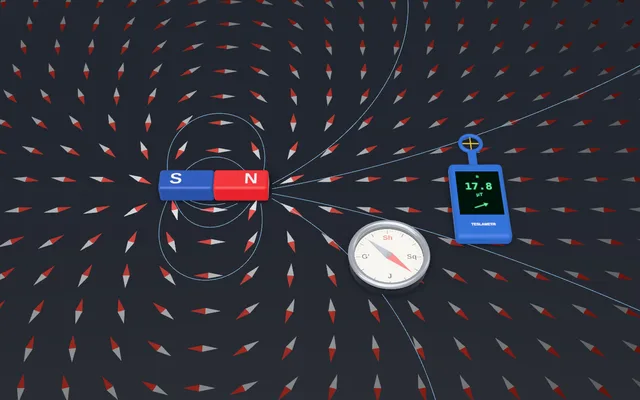 Try it in the labMagnetic field3D lab on this site →Share on Telegram
Sources: NobelPrize.org — 2016